Pre-wedding doubts – is it normal? How to talk about your fears with your partner
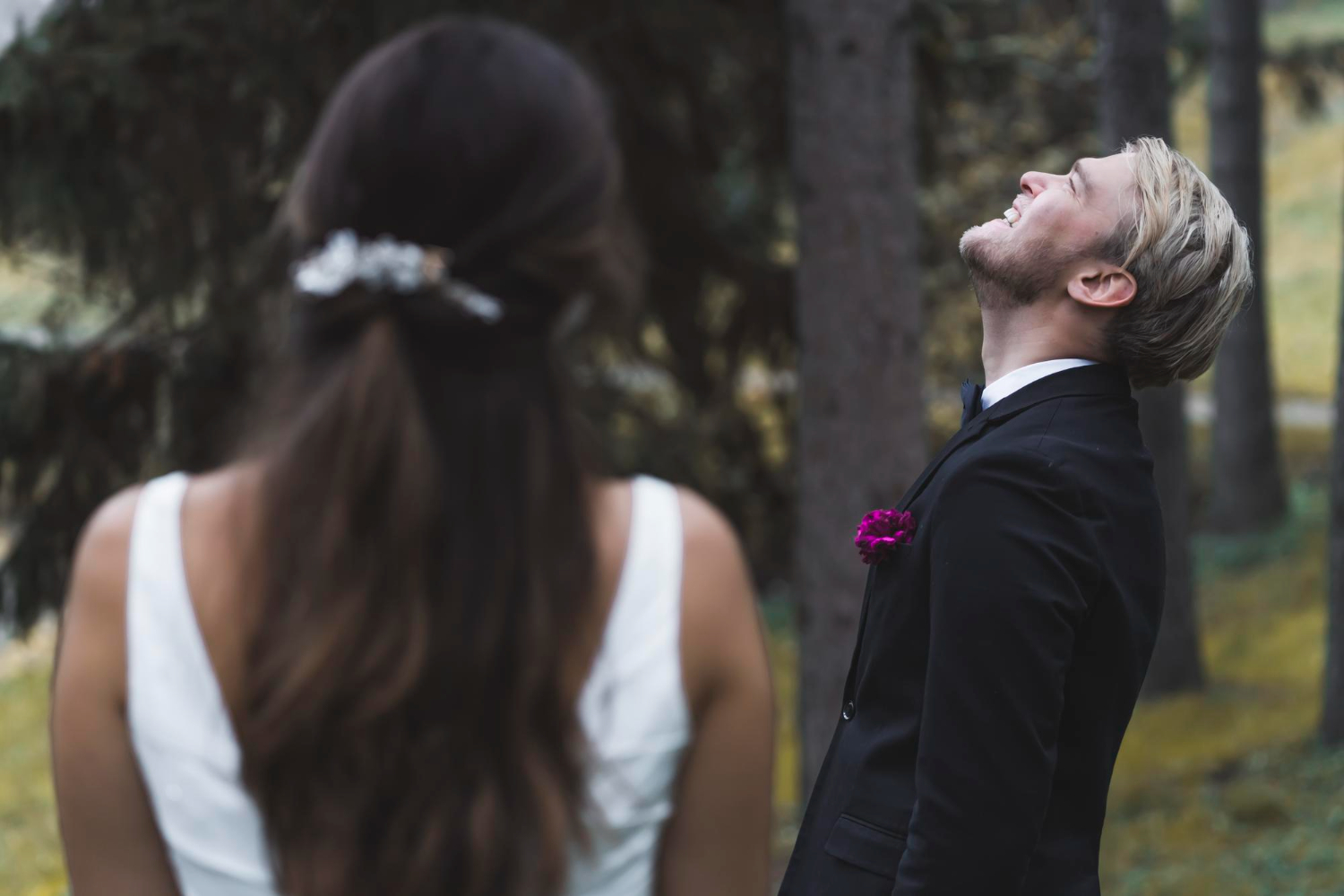
A wedding is a significant moment in life, filled with deep emotions and excitement. Engaged couples stand on the threshold of a new chapter, full of joy but also responsibility. It is natural that during such a time, questions arise: "Will everything go well?", "Are we ready for marriage?". Many couples experience so-called cold feet – sudden anxieties and doubts in the final weeks before the ceremony. This is not a sign of weakness, but proof that you take your future seriously. Wedding-related stress and problems are not uncommon – even couples who have been together for years ask themselves if they are making a mistake. In this article, we reassure you: this is completely normal, and we show you how to talk openly about your feelings. You will find practical advice and examples of how to build understanding and support in your relationship on the path to a life together.
Where do doubts and cold feet come from?
Doubts before the wedding arise for various reasons. First of all, people fear change. Marriage is a big step: a wedding means a change in civil status, but above all, it means a shared life, new responsibilities, and commitments. For some of us, the thought of losing our current independence can be stressful – a typical example is the fear of losing one's freedom. One might also worry about routine or responsibility: sometimes we wonder if we will be able to maintain our current spontaneity and passions after the wedding. These are all normal thoughts – marriage is associated with a lifelong commitment, so questions about whether we are truly ready for such a step naturally arise.
The second important factor is social pressure. Engaged couples often feel that they are expected to succeed – a beautiful ceremony, a perfect wedding, a life "by the book". We compare ourselves to other couples, look at marriages in our family or among friends – and sometimes we see divorces and conflicts there. If parents or loved ones have had difficult experiences, a fear that the same might happen to us can emerge. It is worth remembering that there is no single recipe for a relationship and everyone builds it differently – and doubts are rather proof that you are not taking this decision lightly, but are consciously analyzing it.
Additionally, doubts can simply be a result of stress. Wedding preparations are a time of intense emotions: we organize the reception, choose the dress and suit, wedding invitations, and everything else that keeps us busy with a million things. Stress, lack of sleep, and nerves while finalizing the guest list or shopping increase adrenaline levels. In such moments, hesitation, mood swings, and anxiety are normal phenomena. This type of doubt rarely means a problem in the relationship – it is simply organizational tension and fear of the unknown.
However, anxiety can also have specific sources. If you feel strong fear or panic, it is worth looking at the causes – for example, if certain thoughts keep recurring. Are you worried about losing your freedom? Is there something in your relationship that raises doubts (e.g., the partner's rush, past behavior, addictions)? Psychologists emphasize that the source of the doubts matters. If you are mainly worried about the organization of the wedding and the future, it is a sign that you are responsible and need time to refine the details. But if the concerns relate to more serious matters – e.g., you are worried about financial issues, lack of support from your partner, or their tendency toward questionable behavior – it is a signal to look at them more closely.
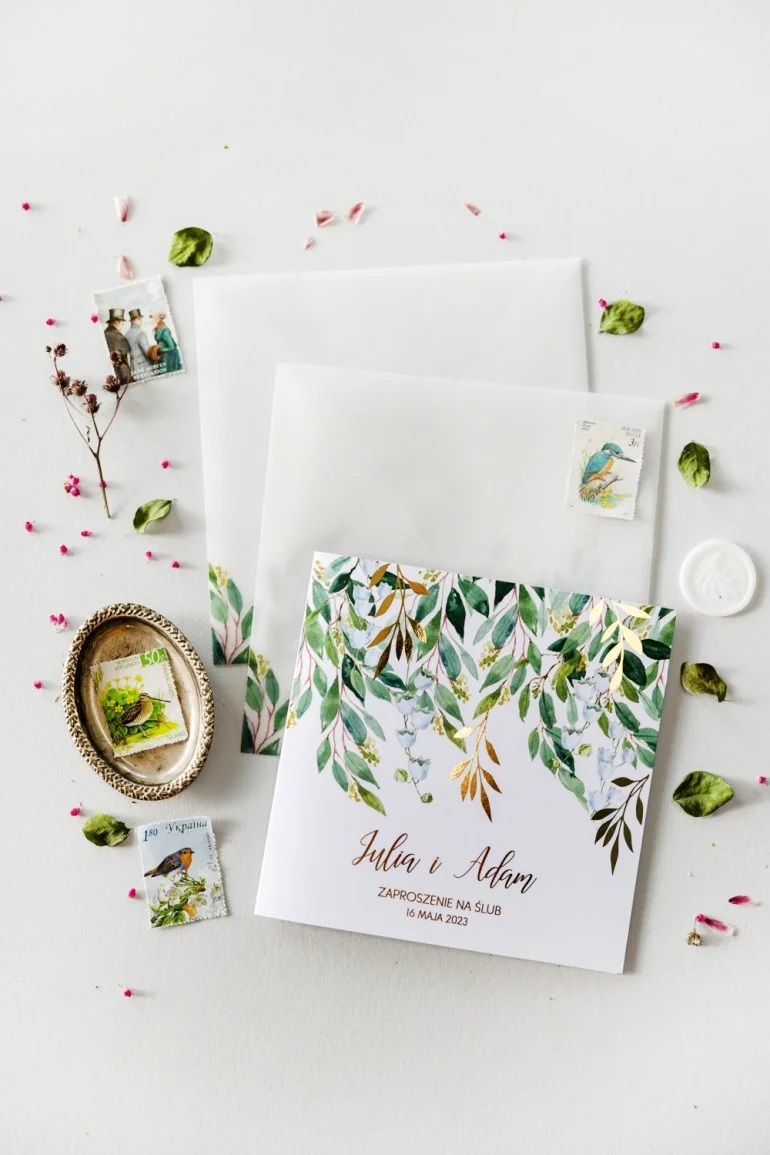
Wedding invitations with green leaf motif, gold accents, classic | Gold wedding invitations | Rubin No. 4
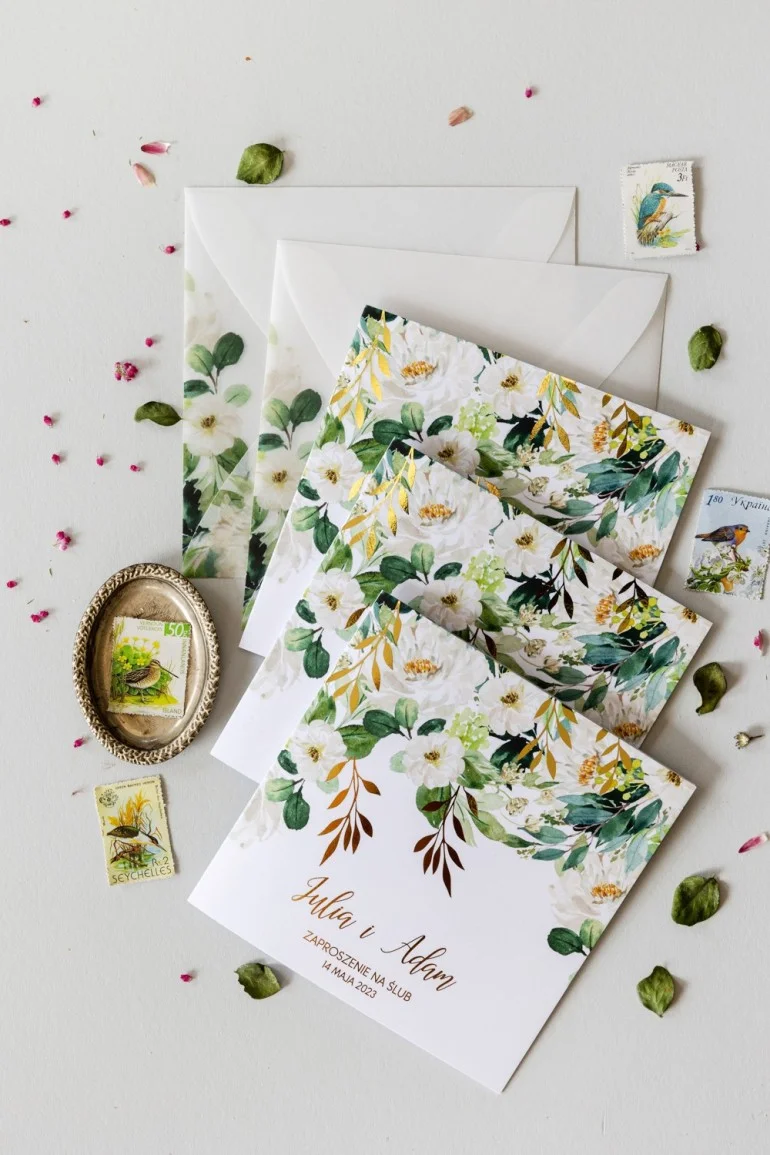
Stylish Wedding Invitations with Gold Accents, Watercolor Flowers | Exclusive Wedding Invitations | Rubin No. 1
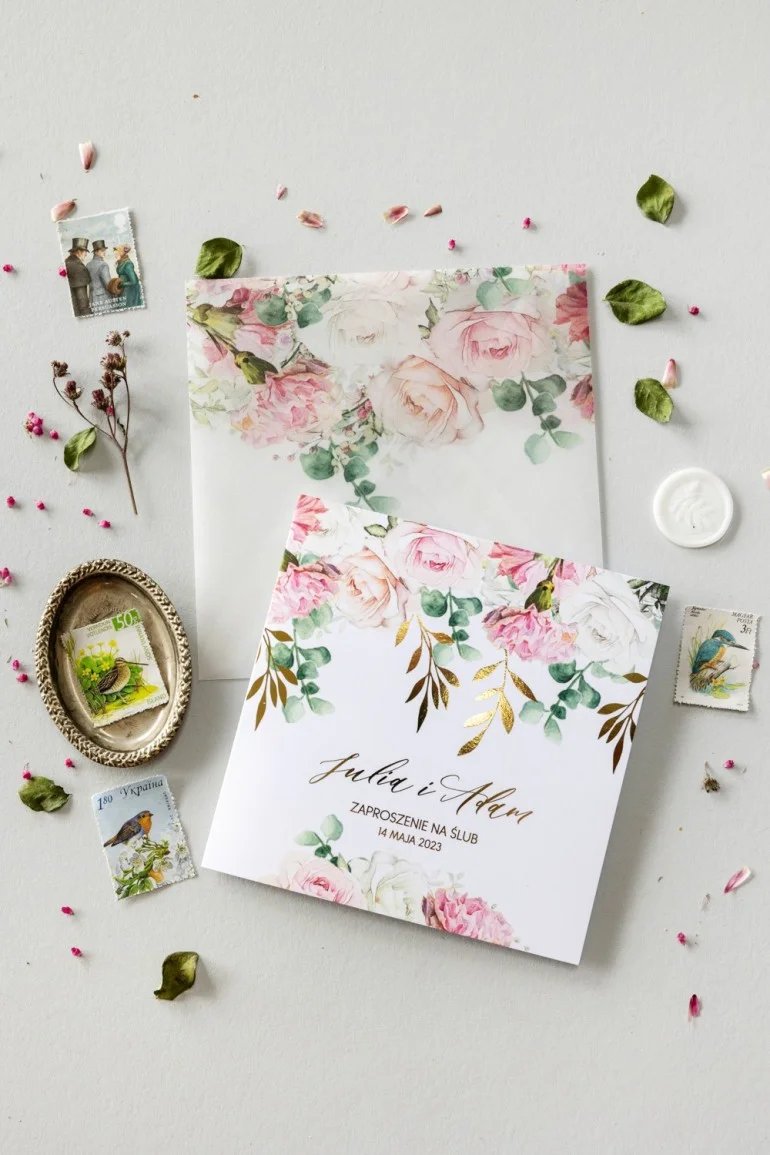
Wedding invitations with pink roses and gold foil, transparent envelope | glamour style wedding invitations | Rubin No. 9
Cold feet – what does it mean?
Table of contents:
- Where do doubts and cold feet come from?
- Cold feet – what does it mean?
- Normal doubts – don't ignore them, but don't panic
- How to talk about concerns with your partner?
- Mutual support and understanding – the key to confidence
- Wedding organization – believe in the power of preparation
- When to seek help – psychologist, therapist, or clergy?
- Summary – dialogue and love build certainty
The term "cold feet" refers to a paralyzing feeling of fear before a major change. Future spouses sometimes compare it to a scene where they are about to run to the altar and suddenly stop in terror. Physically, one might experience rapid breathing, trembling hands, or a stomach ache – these are common bodily reactions to stress.
If you are wondering whether it is just cold feet or something more, ask yourself these questions:
- Does the fear intensify suddenly and pass quickly? If the stress fades after a short time and you feel relieved again, it is most likely normal anxiety.
- Can we still talk about the future? If conversations with your partner about plans are clear and hopeful, it is a sign that you will recover and get through everything together.
- Do the doubts concern the partner or just the organization? Are you worried about comments from others or are you dramatizing because of minor planning mishaps? If so, relax – it's just a common effect of stress.
- Is the fear paralyzing? If your thoughts about the wedding cause panic attacks or a desire to run away from the plans, it might be more than just a phase. In that case, it is worth considering professional help – a psychologist or therapist.
It is worth realizing: you have the right to feel uncertain. You and your future wife (or future husband) are on the threshold of a major life change. Love is a beautiful feeling, but marriage is also a big commitment. In such moments, everyone around you usually helps you celebrate, and very few people talk about the problems – so it's easy to believe that you are the only one feeling fear. In reality, many engaged couples asked just before the wedding speak of similar anxieties zwierciadlo.pl psychocare.pl. You are not alone – the key is not to keep it inside, but to talk about it honestly.
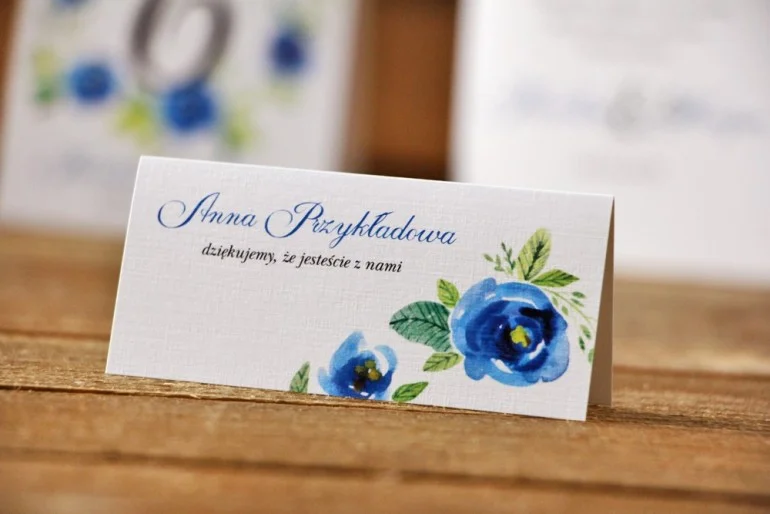
Place cards on linen-textured paper with roses in blue shades | Watercolors No. 10
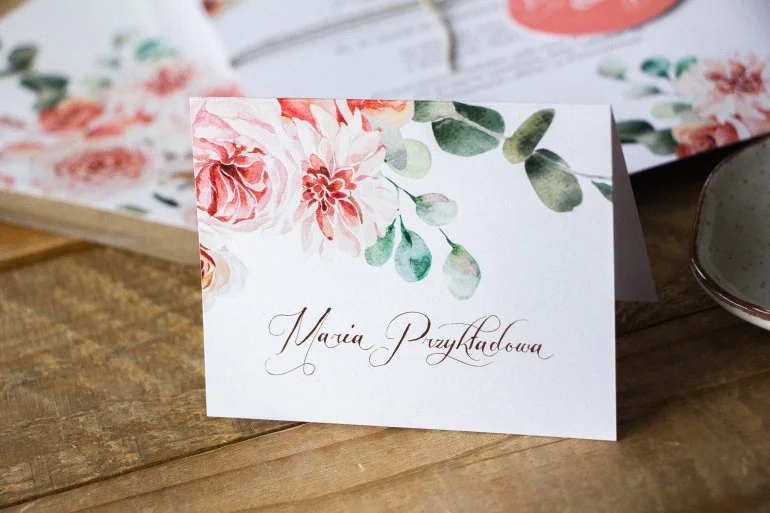
Place cards with a pink bouquet composition | Indigo No. 7
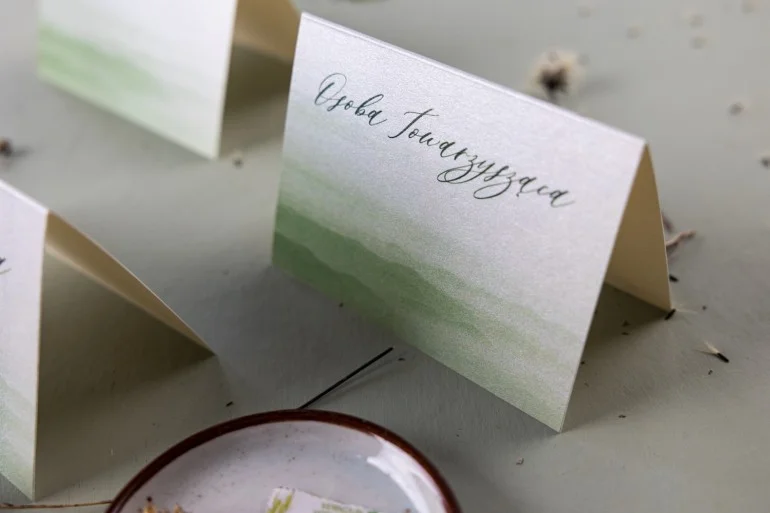
Wedding place cards on pearlescent cream paper with green decorations | Opal No. 11
Normal doubts – don't ignore them, but don't panic
Doubts before the wedding are not alarming in themselves – they are a very natural reaction. We can call it a signal of responsibility. When we hear from loved ones: "Enjoy the preparations!", sometimes we don't have the courage to admit that there is fear lurking in the back of our minds. But that's okay – it's better to repeat to each other: "Yes, I feel nervous, it's normal". Reassuring yourself and your partner that every normal person has such moments is crucial.
It is worth keeping perspective. A wedding is a special day, but not the only one in life. Even if the ceremony doesn't go perfectly or minor mishaps occur, marriage often lasts for years and is built on daily decisions about love and support. Engaged couples sometimes feel "decision paralysis" at the thought of all the matters related to organizing the wedding. That is why looking from a distance is helpful – try to imagine scenarios, including the worst ones. The question is: will you really lose that much if something goes wrong? Usually, it turns out there was no great tragedy, and your partner is still by your side. It is also good to think about a contingency plan to be prepared for various eventualities, about which you can read more in our article: Wedding contingency plan: how to prepare for surprises and bad weather?
Importantly, doubts can also stem from where the decision to get married came from. Do you both truly desire a life together, or is the wedding more of a tradition, family pressure, or societal expectation? Sometimes we subconsciously fear that "it's now or never" – the thought that we won't find a better candidate. It is worth discussing this openly – if you have such a fear even for a moment, tell your partner. Such honesty can bring you even closer together instead of building a gap.
According to the psychology of love, every relationship is supported by three pillars: passion, intimacy, and commitment (according to Sternberg's theory) zwierciadlo.pl. At the beginning of a relationship, passion dominates (butterflies in the stomach), but over time, intimacy (closeness) and finally commitment come to the fore. Deciding on a wedding ceremony is a signal that the commitment stage is arriving. A bit of stress related to this transition is normal – you are entering unknown areas of a shared life. It doesn't mean you have to cry every night, but short moments of uncertainty do happen.
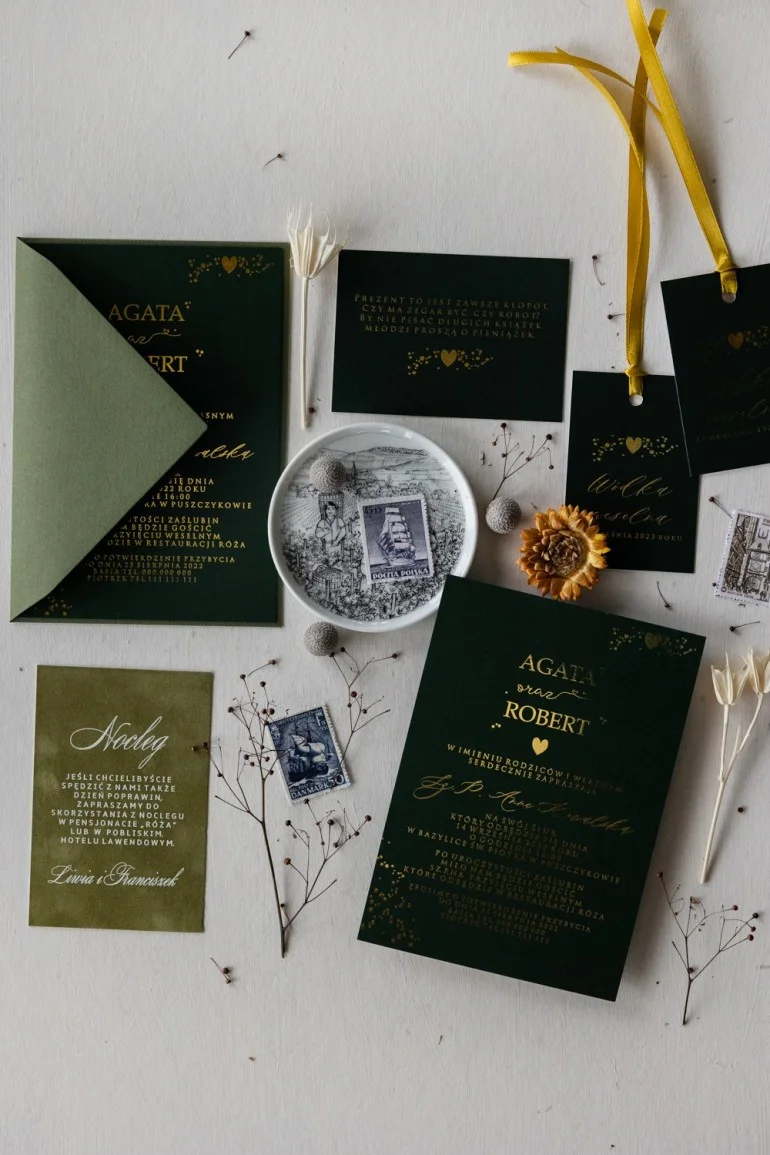
Single-card Wedding Invitations with gold foil | Simple No. 2
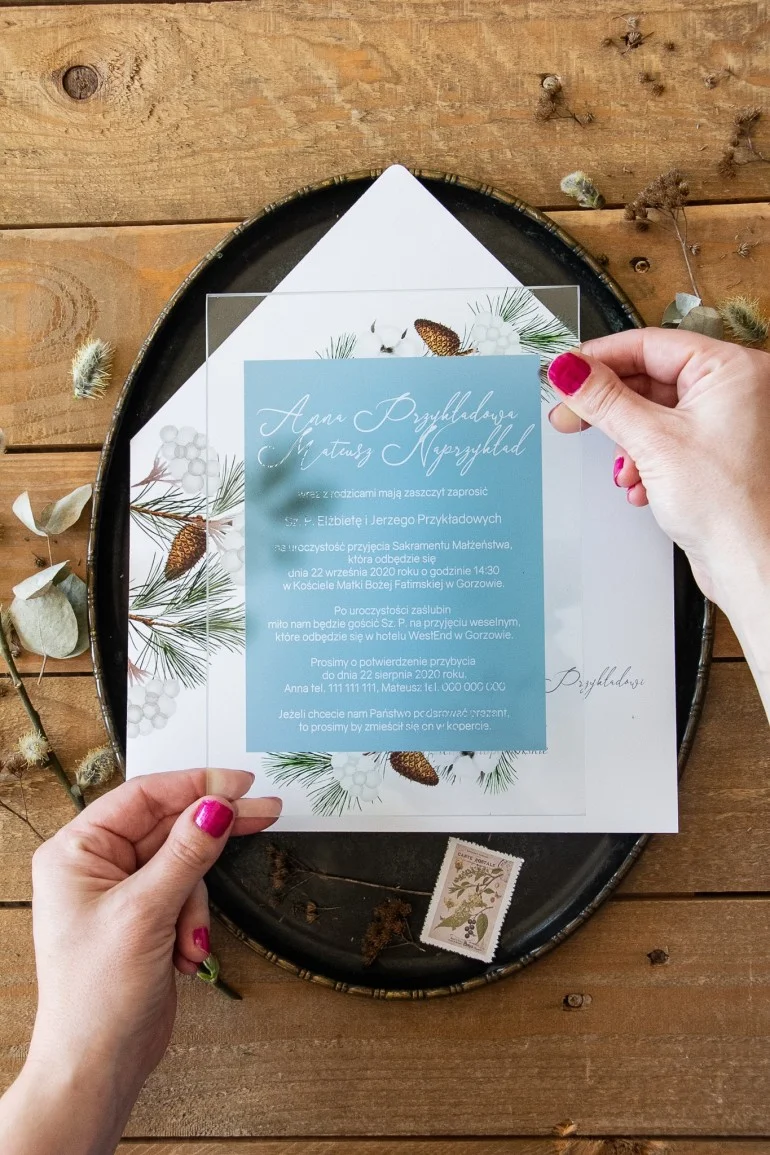
Extravagant Glass Wedding Invitations | Glass Winter Accent | Cotton & Pine | Korani No. 8
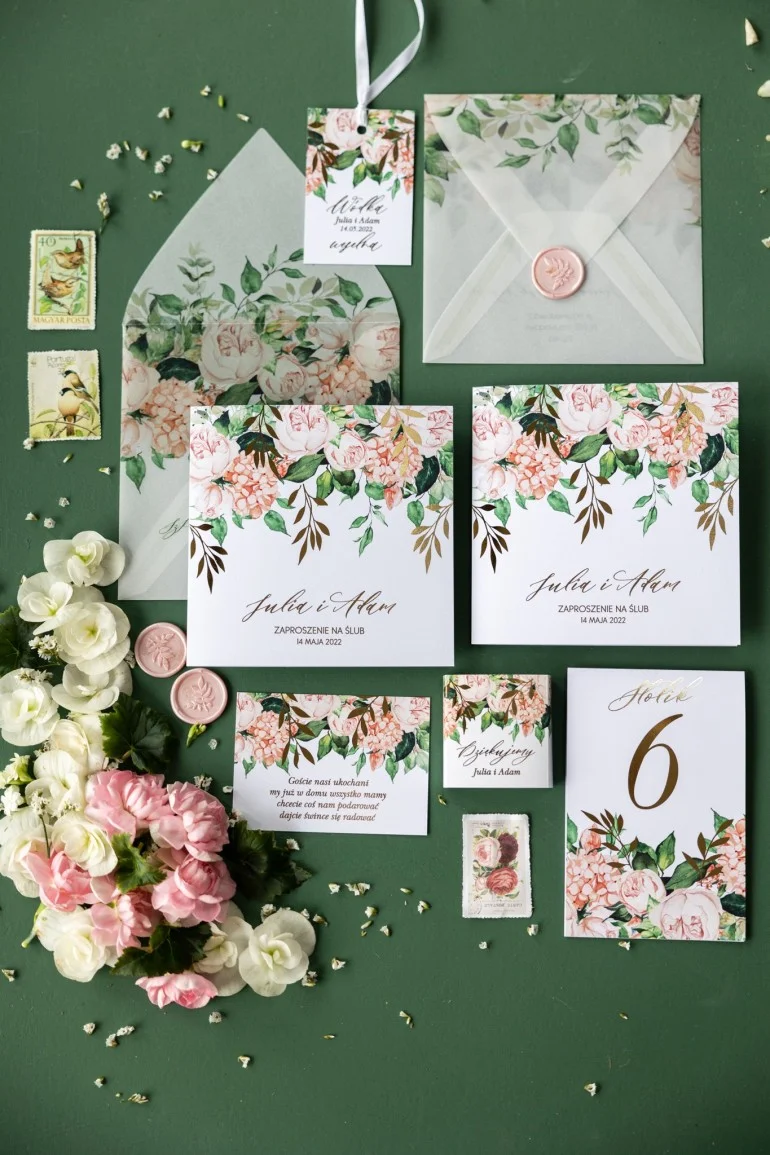
Unique Wedding Invitation with Gold Foil, Pink Peonies and Vellum Envelope | Unusual Wedding Invitations | Rubin No. 10
How to talk about concerns with your partner?
Talking to your significant other is an absolute foundation. Regardless of gender, the bride and groom should talk as much and as simply as possible about their feelings during this time. Sweeping problems under the rug or avoiding conversations will only increase tension. If unpleasant emotions have already appeared, the best way is an honest face-to-face conversation, preferably in a quiet place where no one will disturb you.
To start, it is worth saying clearly: "I feel nervous" or "Certain things worry me". Avoid accusations and radical statements. Don't say "You never understand" or "It's all your fault". Instead, use "I" statements: "I am worried about...", "I am afraid that...", "I feel anxious because...". This way, your partner will not feel attacked, but will understand that these are your emotions and you need support.
The conversation should be two-way – you both need to give each other space to say what hurts. Maybe he is worried about finances, planning the future, or not meeting expectations, and she has fears about children's health or the home. Ask open-ended questions: for example, "What stresses you out the most about our wedding?", "Where do your concerns come from?" or "What are your expectations for what happens after the wedding?". Listen carefully and don't interrupt – when your partner is speaking, don't use your phone or offer solutions immediately. Sometimes it is enough to maintain the conversation with a warm look and a nod. It is important that both sides feel involved in the preparation process, about which we write more in the article Why is it worth involving the Groom in wedding preparations?
A good practice is to schedule regular talks about the preparations. When everything is chaotic, it's easy to overlook that the relationship between you is the most important thing. Find even half an hour a day to talk without rushing about your feelings. You can use a simple technique: each person mentions what they felt most joyful about today, what caused anxiety, and what they would like. This builds empathy. Sometimes it is also worth writing down your doubts on a piece of paper – this facilitates later discussion.
Practical tips – how to talk:
- Choose a calm moment and place – pick a time when you are rested and without distractions.
- Speak in the first person – start sentences with "I feel", "I am worried", etc., so the other person knows these are your experiences.
- Practice empathy – when you listen to your partner, repeat in your own words what you heard ("Do I understand correctly that...").
- Write down challenges together – writing down shared fears will allow you to look at them objectively and plan solutions.
- Support each other – assure each other that you are on the same side and will manage together. An expression of this can be a hug, cuddling, or a kiss to calm down.
Communication is the simplest way to reduce tension. Openly sharing feelings strengthens the bond and builds trust. Remember that your partner may also have their own doubts – try to be tender, full of support and understanding. Sometimes it is worth saying something nice too: "I know we can get through this together" or "I love you, thank you for talking about this". Mutual care and talking about the shared future will strengthen you and make the concerns smaller.

Wedding Guest Book with a forest motif | Opal No. 2
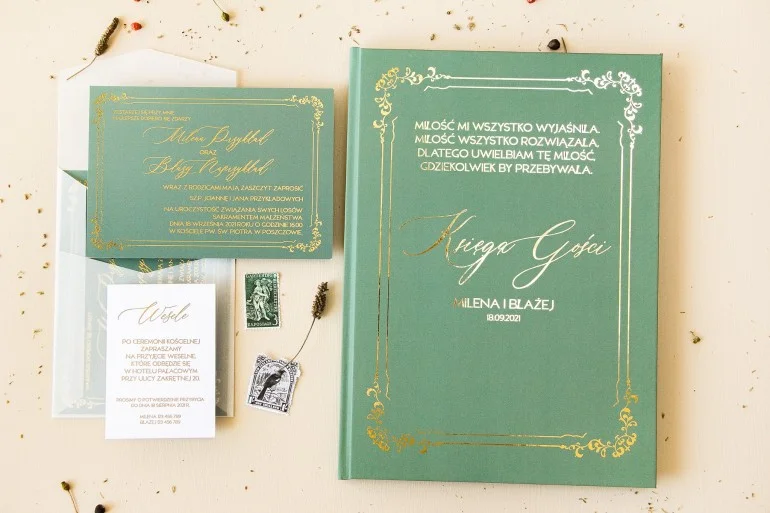
Personalized Guest Book with calligraphic gold lettering | Sand No. 3
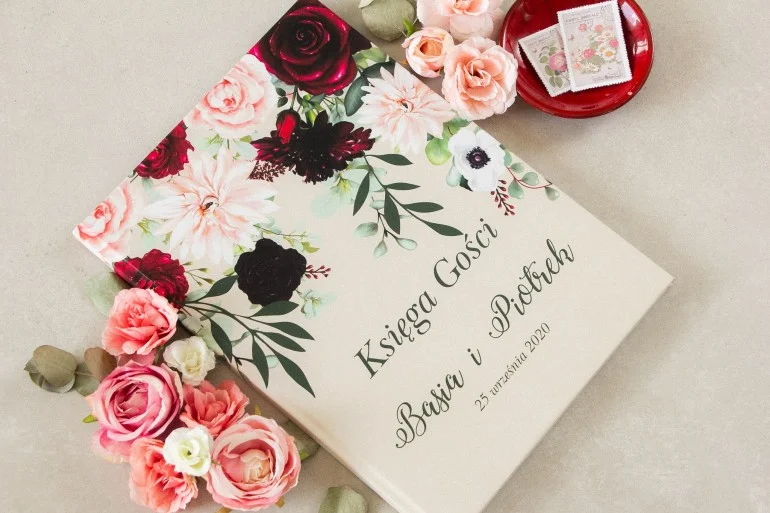
Burgundy Guest Book with anemones and dahlias | Korani No. 4
During a difficult conversation, the support of the other person is invaluable. Engaged couples should hug, listen with understanding, and repeat to each other: "We will get through everything together". Such an intimate moment allows for easing tension and recalling a sense of security. Even a small gesture – like holding hands – shows that your partner will always be there for you, regardless of any doubts.
Mutual support and understanding – the key to confidence
Building mutual support even before the wedding creates a foundation for the future marriage. During this engagement period, you must learn how to deal with challenges together. A sense of security in a relationship comes from two things: trust (I know my partner won't leave me) and intimacy (I can talk about everything because I will be understood). You both must give each other a sign that you share these principles.
When one of you feels concern, it is important for the other to react with warmth and empathy. Avoid dismissing feelings. Instead of "Don't be afraid, it's nothing", it is better to say "I hear that this scares you – tell me more". Understanding means realizing together: your feelings are important. You can also swap roles – sometimes it is useful to pretend that I am the one with concerns and you comfort me. Such an exercise can bring a lot of smiles and, at the same time, give a sense of mutual understanding.
Mutual support also means looking for the positives: when doubts arise, it is worth reminding yourselves what led you to the wedding. It could be love (sentiment, shared plans), trust, or even just the simple joy of being together. Sometimes it is helpful to write down on a piece of paper the reasons why you are deciding to get married. Reminding yourselves of your mutual love and past successes builds confidence as a couple. After all, love is the strength that helped you get where you are.
Don't forget about daily gestures of support: small rituals can lower stress. It could be having breakfast together while planning the wedding day, holding hands in church during a rehearsal, or just a "Thinking of you" text on a busy day. It is also worth taking a break from preparations together – going for a walk, watching a series, or having a relaxing dinner allows you to take a breath from wedding topics and remember that you are primarily yourselves, not just a couple planning a wedding.
Concluding this thread, let's remember: building mutual support is a process. If you sometimes argue or are tired of the situation, it is understandable. It is important to quickly return to conversation and reassure each other. Every couple has their own unique ways of coping – for some, it is an honest conversation, for others, shared laughter or planning subsequent elements. Think about this: wedding organization can become therapy – working together, even on small things, cements your bond and builds a sense of control over the situation.
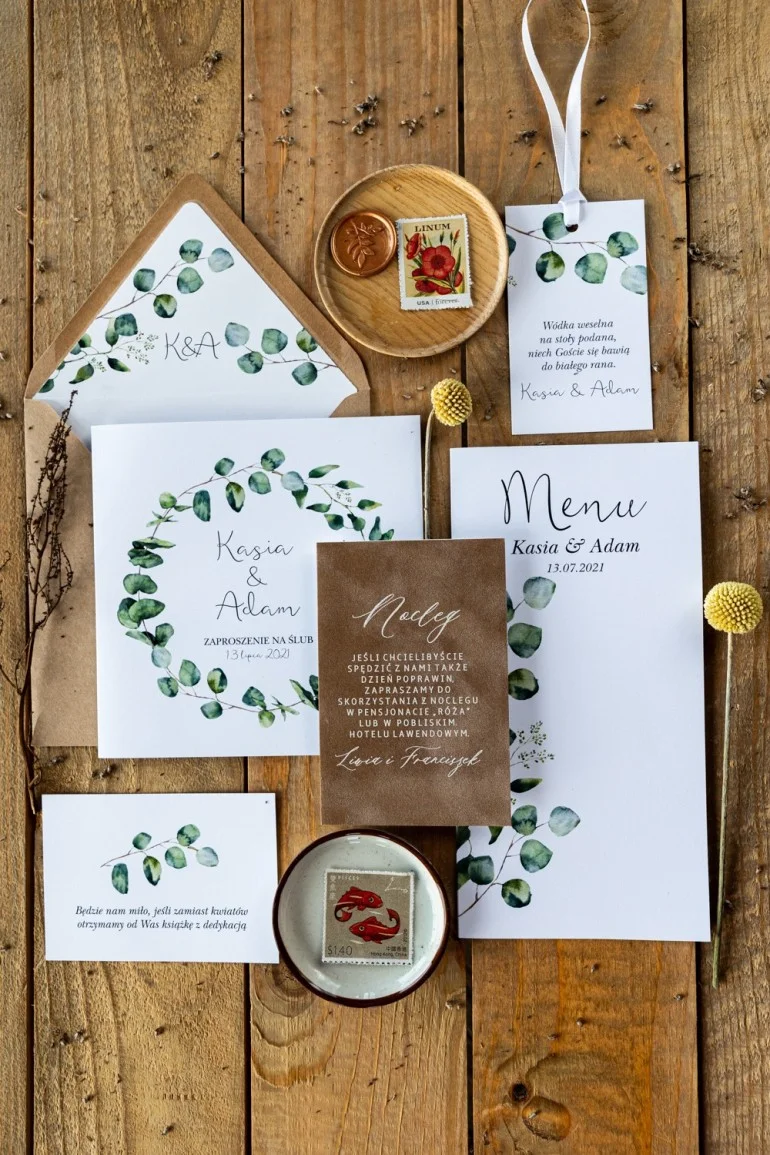
Eco-friendly Invitation with Greenery Styling | Wedding Invitations in an eco-envelope | Kalia No. 2
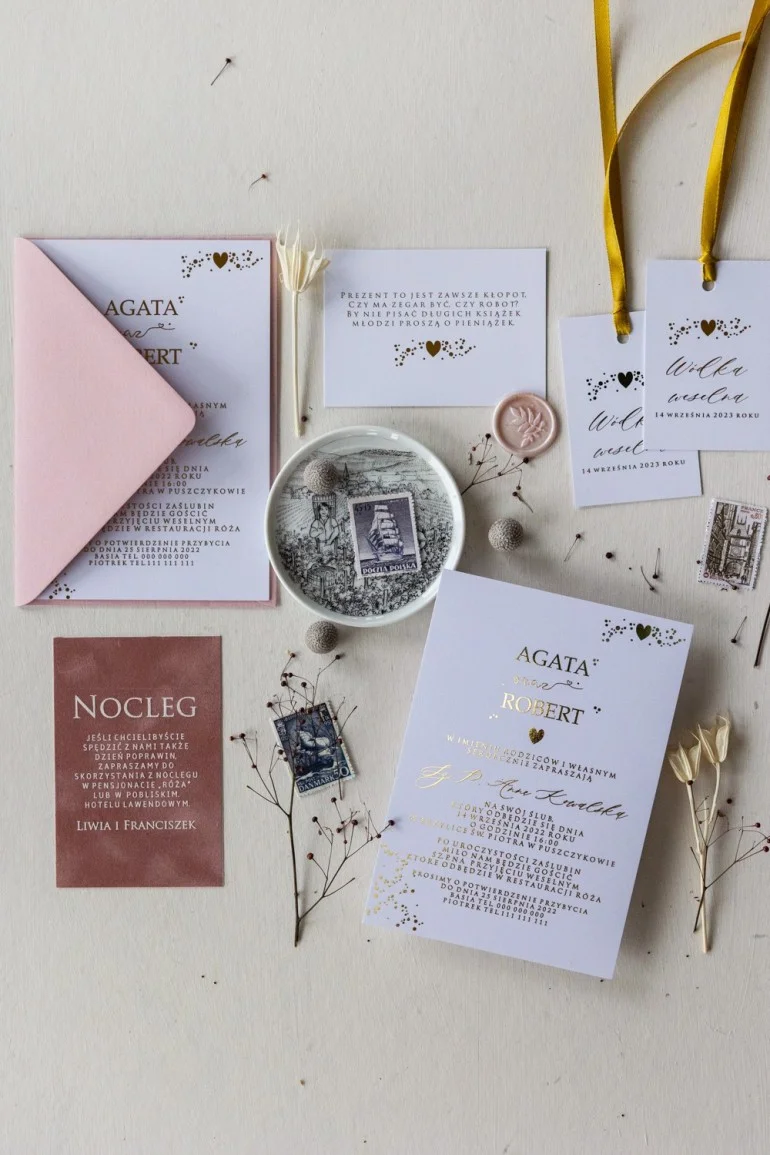
Subtle Wedding Invitations, Minimalist Design with Gold Elements | Simple No. 3
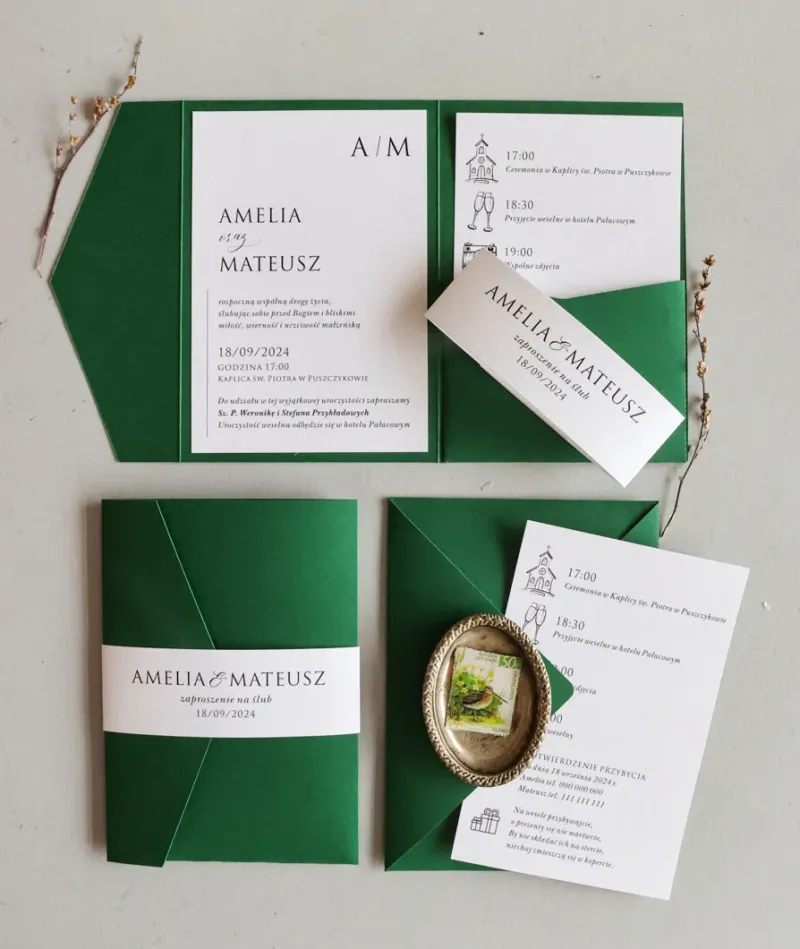
Elegant Wedding Invitations in Shades of Bottle Green | Minimalist Design and Modernity | Kraft No. 10
Wedding organization – believe in the power of preparation
When emotions take over, it is worth directing energy into specific organizational actions. For many couples, wedding planning acts like therapy – it gives a sense of control and distracts from fear. Every small step forward is a small victory that makes you feel that the situation is under control. Therefore, tackle the wedding preparations together – from something simple to more complex tasks.
Wedding invitations
Start by choosing the design of your wedding invitations. This is a practical step: you can think together about colors, fonts, and text, which will bring joy from creative cooperation. You can match your new wedding invitations to the wedding theme, which reinforces the feeling that you are building something of your own. First, choose the style (classic or modern, delicate or elegant) and then the details. Just looking at finished designs and imagining how you will send them to loved ones can be a pleasant distraction from stress. If you don't know how to choose wedding invitations, our guide might be helpful. It is also worth considering whether it is cheaper to buy wedding invitations or make them yourself.
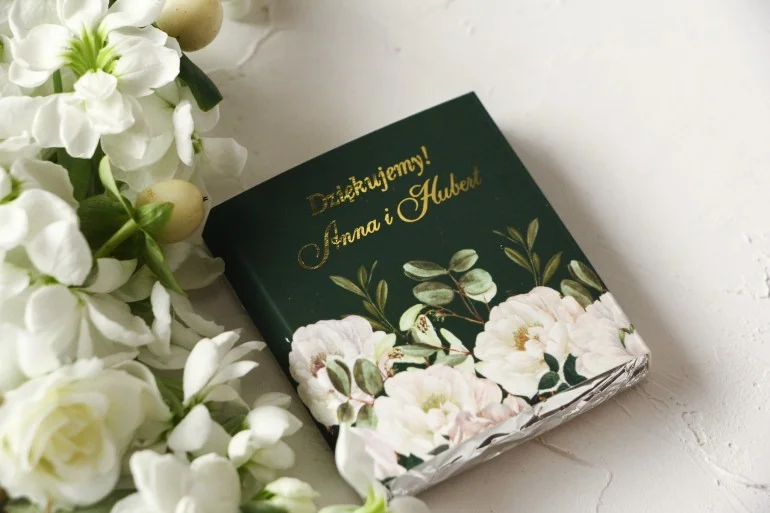
Wedding chocolates as guest favors with a bouquet of white roses and eucalyptus | Sapphire No. 3

Wedding honey with olive branches | Indigo No. 2
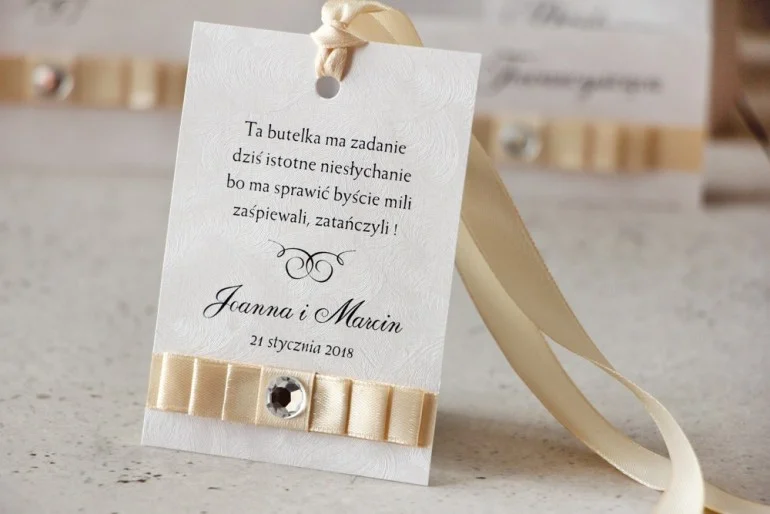
Elegant wedding vodka tags with rhinestones | Amaretto No. 1
Place cards for tables
Arranging guest names and decorating tables together is great teamwork. Prepare place cards together – small cards with guest names. You can decide on the shape, patterns, or ribbons, which will unleash creativity. This task requires shared presence and communication – perhaps one person will write, the other will cut, but it is important that you spend time together and with a smile. Are you wondering when to order place cards? Our blog will clear up your doubts.
Guest favors
Thinking about gifts for parents, witnesses, and guests can introduce a positive perspective. Make a list of thank-you gifts together: it could be a handmade card or a small gadget with your graphics. Guest favors are best prepared in advance – choosing how to express gratitude is another creative stage. During preparations, talk about what you are grateful for to each other – this builds conscious love and a sense of shared success. Inspirations for wedding guest favors can also be found on our blog.
Working together on planning has another effect: it teaches compromise and cooperation. For example: if you dream of elegant stationery on high-quality paper, and he prefers something simpler, talk about it calmly and find a middle ground – maybe you will choose a minimalist design with an elegant font? You will both feel that you are in this together. Wedding organization is also about taking care of your health – don't forget about shared moments of relaxation. In difficult moments, it is good to go for a short walk together, listen to your favorite music, or even do relaxation exercises. This helps balance emotions and return to negotiations in a good mood. And when your hands are busy with preparations, your brain can have fewer dramatic thoughts. Focusing on practical aspects – the venue date, guest list, menu, or bouquet – generates a feeling that the wedding is slowly taking shape. Gradually, fear loses to a real action plan.
Summary of tips on organization:
- Divide the work: don't assume that only one person can handle invitations or place cards. Cooperation strengthens the team of the bride and groom.
- Adapt to each other: maybe it's better to divide duties according to skills and interests. The one who likes to write can handle the texts, and the creative person – the graphics.
- Remember to take breaks: even in the rush of things, don't forget about moments for the two of you to recharge your batteries. A short back massage or a cup of tea together can work wonders.
- Small successes build confidence: a booked venue date or choosing a song for the first dance – celebrate every achievement, even the smallest one. It's a good moment for a "toast with wedding vodka" and laughter that will relieve stress.
Thanks to this approach, wedding organization will become one of the best aspects of the preparations. Instead of contributing to anxiety, it will become a way to alleviate it. Planning the ceremony is not just logistics – it is also an expression of your love and commitment. When the bride and groom work together on details, they learn about each other and strengthen trust. The average adrenaline level will drop, and you will discover that your partner is great for that "shared life that we will start soon".
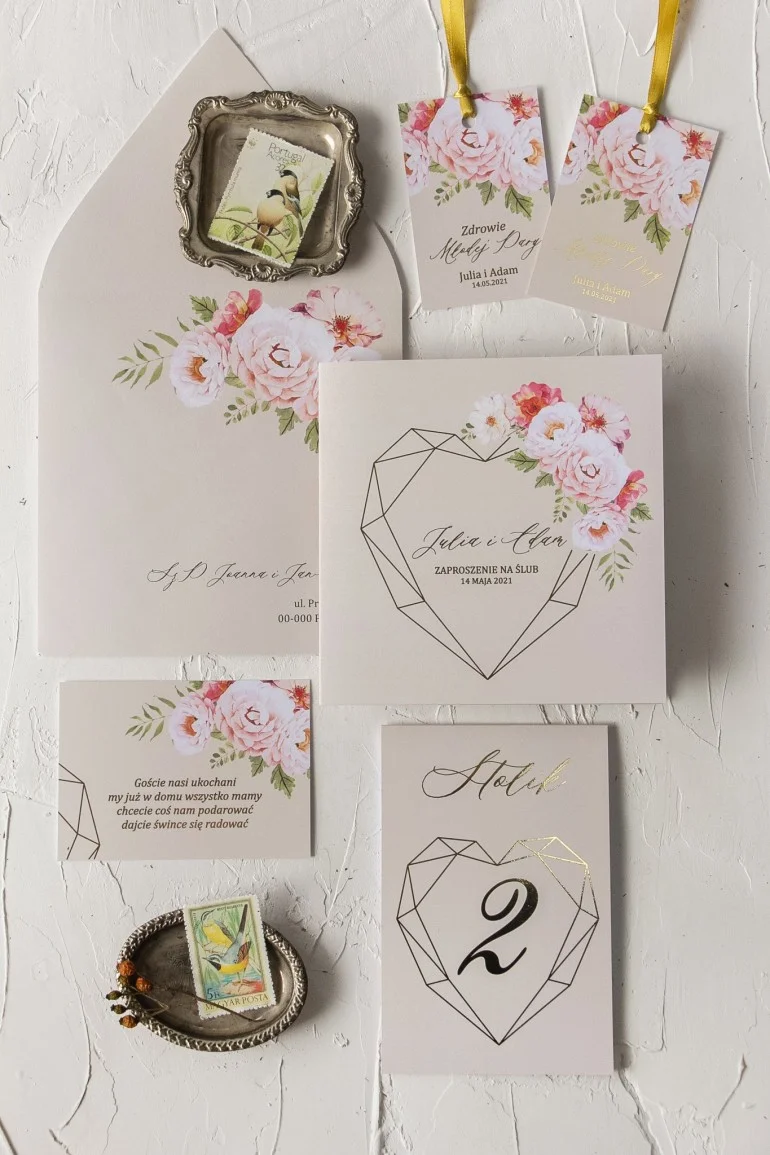
Wedding Invitations with Gold Heart and Floral Motif | Modern and Stylish | Sapphire No. 8
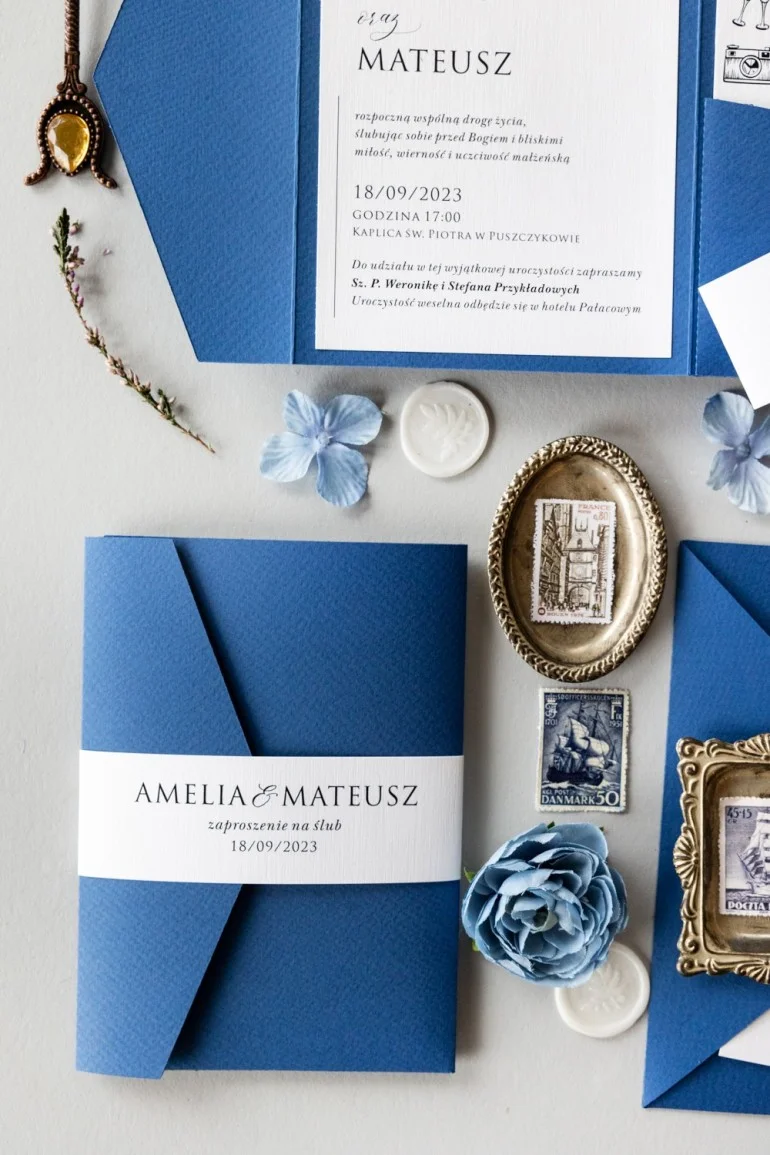
Blue, Elegant Wedding Invitation with Pocket and Personalization | Kraft No. 7
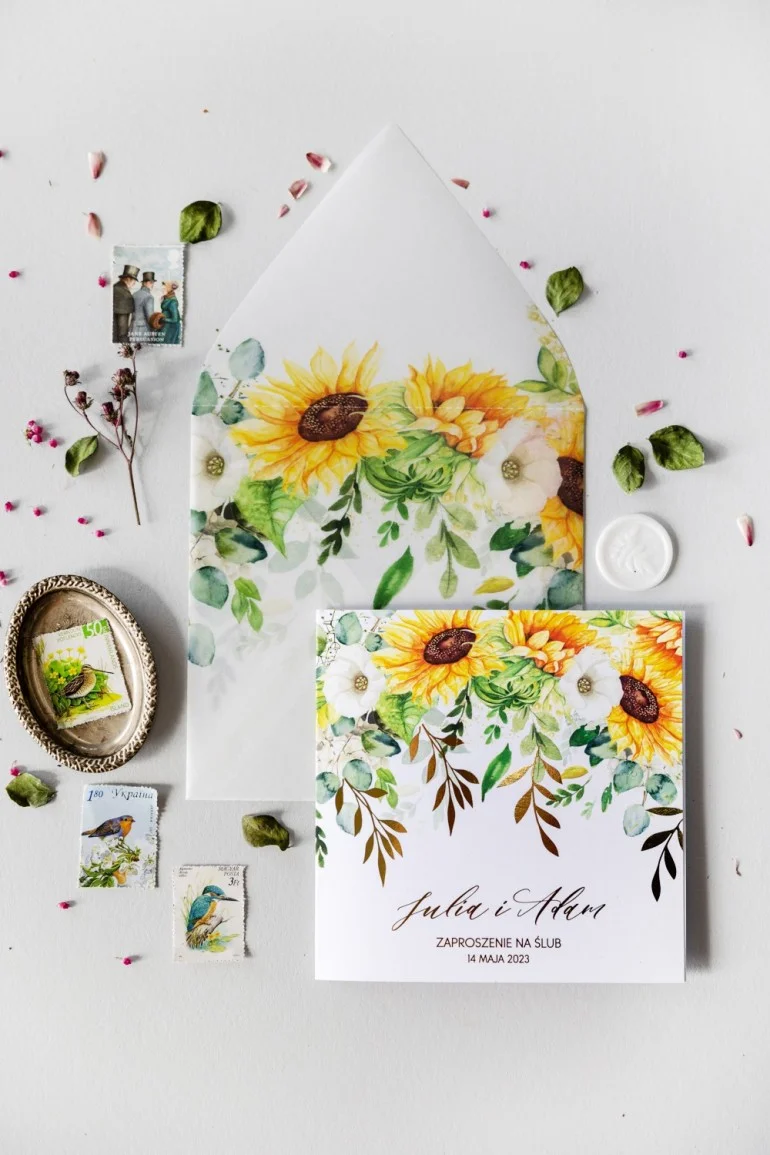
Wedding Invitations with Sunflowers and Gold Foil | Modern and Original | Rubin No. 7
When to seek help – psychologist, therapist, or clergy?
Although pre-wedding doubts are usually normal, there are situations where it is worth reaching for professional support. If you notice that the concerns do not pass or become very strong, you can consider talking to someone impartial. For example:
- When insomnia, anxiety attacks, or depression do not subside, and thoughts about the wedding paralyze daily functioning.
- When conflicts appear in the relationship, recurring arguments about preparations or other matters that you cannot solve yourselves despite attempts.
- When one of the partners definitely does not want to continue preparations – e.g., refuses to talk or tries to cancel everything – and the other partner sees that this does not stem only from temporary stress.
- When the issue concerns a deeper problem: unresolved trauma from the past, serious worldview differences, or fear of marriage due to dramatic events (e.g., betrayal in a previous relationship).
In such cases, a meeting with a psychologist or couples therapist can be helpful. A specialist will help you see the situation from a distance and suggest techniques for coping with emotions. Psychological consultation is nothing to be ashamed of – on the contrary, it shows maturity and a desire to take care of the relationship. Sometimes it is worth mentioning to the psychologist that you are planning a wedding, because good consultations will help you prepare for marriage consciously. During therapy, you can ask yourselves difficult questions – e.g., ones you might be afraid to ask each other: about raising children, finances, emotional support, and even character differences. This will allow you to look into the future more calmly.
For religious couples, talking to a member of the clergy (e.g., a priest) is also a good solution. Many people find solace in prayer and spiritual support. A priest often conducts so-called pre-marital conversations – it's not just about formalities, but also about spiritual preparation. The priest can help organize emotions, understand the meaning of marriage from the perspective of faith, and give a blessing, which for many is a great mental support. Some fears may stem from the fear of living in a family community or fear of not being able to love "until the end of life". The clergy will help look at these issues more broadly, often from a position of experience and faith, which can bring peace.
Of course, it is also worth remembering about the support network – talking to a trusted friend, sibling, or acquaintances who were recently in your situation can bring relief. Sometimes just talking to someone close (not necessarily a specialist) dispels doubts: you will hear that you are the one who is right! Remember, however, to choose helpful listeners wisely – not every person will advise you best (e.g., someone who negatively evaluates marriage themselves may only fuel the fear).
Ultimately, it is worth remembering that even if you decide to seek the advice of a specialist, the final decision about the wedding belongs to the two of you. A psychologist or pastor can help you get through a difficult moment, but no one can force you to get married or forbid it. The goal is to help you make this decision with full awareness. If after such a conversation you feel better prepared and determined – it is a sign that you have entered the next stage of your life together with a healthier attitude.
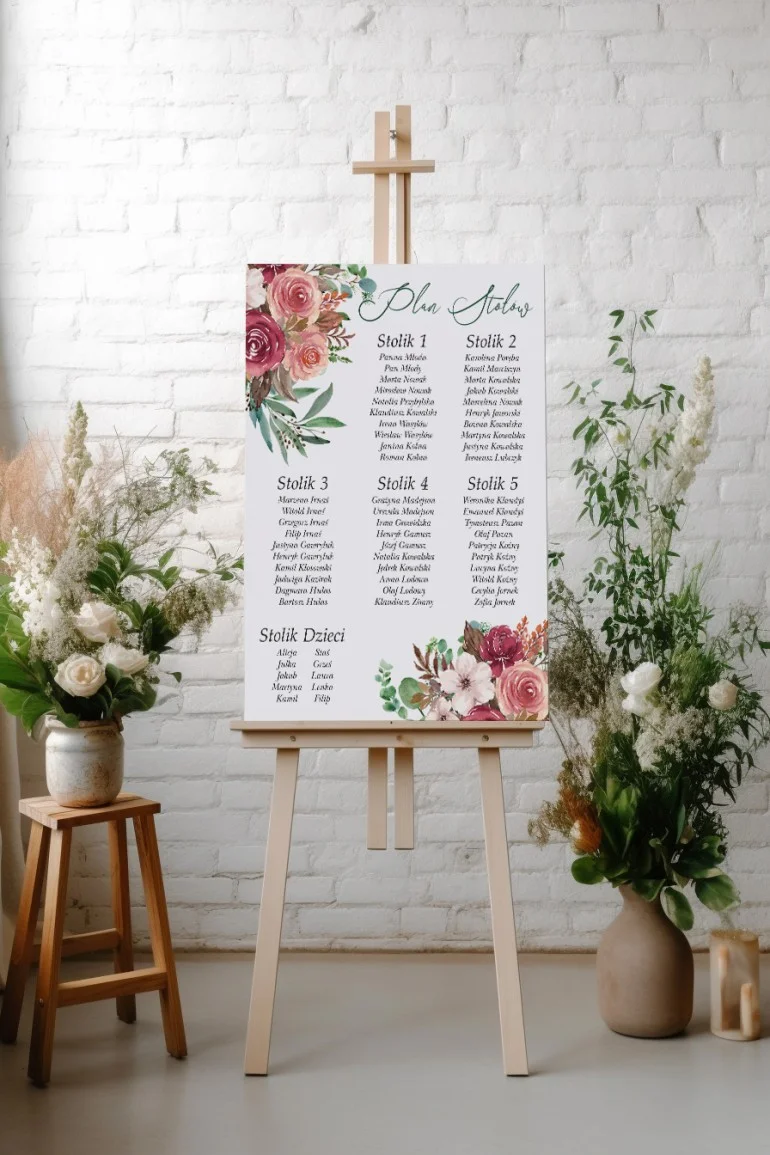
Seating plan Delize No. 3
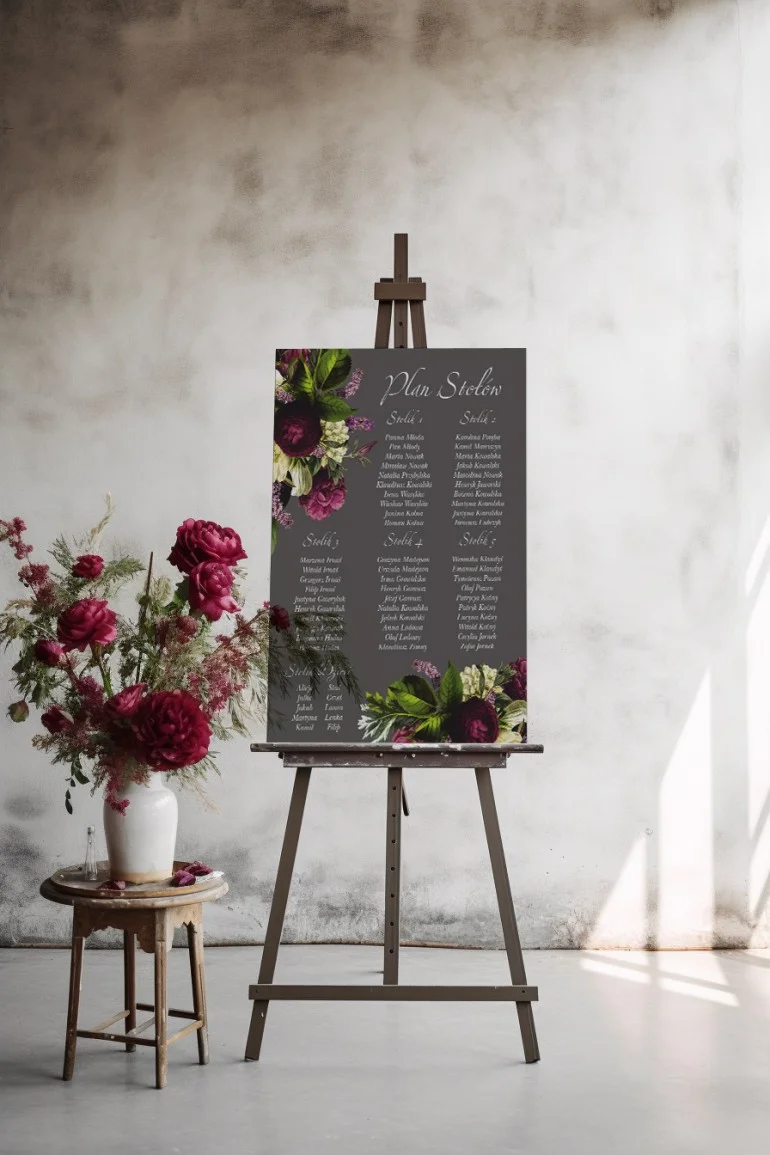
Seating plan Eteryczne No. 2
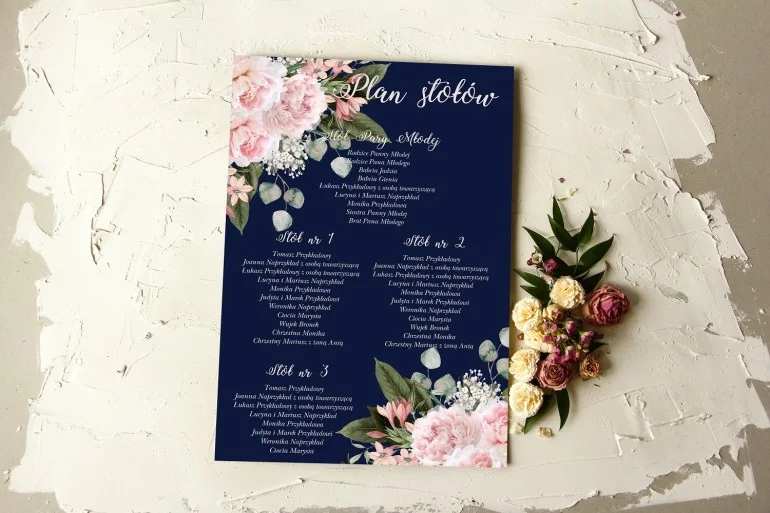
Seating plan Pastelowe No. 3
Summary – dialogue and love build certainty
Doubts before the wedding are part of the preparations and can affect every bride and groom. It is important to look at them as a natural signal: you are serious and you care about this moment. In all of this, communication and mutual support are key. Honestly share your emotions – whether it's a concern about the order with a catering company or deeper fears about the future. Treat the conversation as a new kind of marital intimacy. Every shared "talk through" of concerns brings you closer together.
Also, remember to cultivate the love and understanding that are the pillars of every lasting marriage. In moments of doubt, remind yourselves what brought you together, what dreams you have, and why you decided to get married. By building mutual trust during the engagement, you are investing in happiness after the wedding. Love and partnership are resources that will help you overcome any doubts and build a life together, day by day.
Finally, let's recall a few simple rules that can help you get through this time:
- Trust each other: Remind each other – you are one team. Even if anxiety bothers you for a moment, you have each other for support.
- Talk openly: Every topic can be worked through with conversation. Don't be afraid to ask: "Why do you have such concerns?" or "How can I help you feel better?".
- Remember that this is a phase: Emotions change – it doesn't mean love will disappear. Every marriage has its ups and downs. Doubts before the wedding are like a moment of storm before coming to terms with a new stage.
- Act together: Get involved in wedding planning – wedding invitations, decorations, or guest list. Shared tasks will confirm your sense of control and building a shared future.
- Don't be afraid to ask for help: If, despite everything, the tension increases, seek help – whether it's a conversation with a psychologist, a guided dialogue as a couple, or prayer before a member of the clergy. Such an investment in the relationship is the best gift for the start of a new life.
Finally – believe in yourselves and in your love. In every couple, there is strength to overcome uncertainty. You are on the right track – cooperation, support, and open conversation will make the wedding day come with joy, and the fear will disappear, giving way to excitement for a new beginning. We wish you many pleasant preparations and an unforgettable Wedding Day!
Recommended articles:
- How to choose a suit or tuxedo? Wedding guide for the Groom
- Health and beauty before the wedding: Care, diet, and training plan for the Bride and Groom
- How to compose the perfect wedding menu? Guide for Brides and Grooms
- Guest list and seating wedding guests: How to create the perfect seating plan?
- When to start planning a wedding?
- Top 10 mistakes made by Brides and Grooms during wedding organization
- Why is it worth having a wedding day schedule?
Szymon Jędrzejczak
Wedding industry expert and stationery designer at Amelia-Wedding.pl. For years, helping couples create unforgettable moments by combining tradition with modern design.