
Is wedding planning just a long to-do list? Engaged couples often focus on organizational matters: choosing the venue, attire, menu, or sending out wedding invitations. In the heat of planning, it is easy to forget about details like wedding favors or elegant place cards, let alone something less tangible but crucial – preparation for marriage itself. Meanwhile, psychological and spiritual preparation for the wedding may turn out to be the most important investment in the future of your relationship. Today, more and more couples are wondering how to take care of their bond before saying "I do." Fortunately, there are many options: from mandatory pre-marital courses and voluntary workshops for engaged couples to couples therapy or retreats. Below, we present a comprehensive overview of these forms of preparation – why it is worth taking advantage of them, what you can learn, and how they can strengthen the foundation of your future marriage.
The importance of pre-marital preparation
Planning a wedding vs. planning a marriage
Table of contents
- The importance of pre-marital preparation
- Mandatory church pre-marital courses – what you need to know
- Secular pre-marital courses – workshops for engaged couples
- Couples therapy for the engaged – when and why is it worth it?
- Retreats for the engaged – spiritual preparation for marriage
- How to choose the right form of preparation for you?
- A foundation for the future – an investment that pays off
A wedding and reception are important events that consume a lot of time and energy. Booking the date, setting the guest list, choosing the menu, and refining every detail – from decorations to invitations and small gifts for guests – is a major logistical challenge. However, in wedding preparations, it is worth remembering that the ceremony and reception are just the beginning of your journey together. It is equally important (perhaps even more so) to plan the marriage itself: taking care of the relationship, communication, mutual understanding, and shared values. Learn when to start planning your wedding so you have time for everything. In other words, it is not enough to prepare a beautiful celebration – you must also prepare each other.
Challenges of modern marriages
Statistics are clear: one in three marriages ends in divorce. Young couples enter married life in times when working under time pressure, financial stress, and high expectations for the relationship have become the norm. Reality can challenge romantic ideals – the first conflicts, personality differences, or disputes over everyday matters arise. Many spouses admit that the first years after the wedding were more difficult than they expected. It is no surprise that the highest number of separations occurs within the first few years of marriage. Faced with these challenges, it is worth asking yourself: can we better prepare for obstacles before we take our vows?
Prevention instead of crisis
Instead of waiting for problems to surprise you, it is better to act in advance. Prevention in a relationship works similarly to taking care of your health – it prevents major crises. Psychologists agree that conscious preparation for marriage can reduce the risk of serious future conflicts. In fact, participating in pre-marital courses can lower the risk of divorce by as much as 30-50%. This happens not only because couples gain specific skills for dealing with problems – sometimes the very decision to attend a course or therapy shows a couple's maturity and desire to nurture their relationship. Moreover, it is estimated that about 10-15% of couples, after completing in-depth preparation (workshops or therapy), conclude that they should not get married after all. Although this sounds drastic, it is better to realize this before the altar than to struggle with a divorce a few years later. Each such scenario confirms that pre-marital courses and therapy are not an unnecessary whim, but a real investment in the durability and quality of your relationship.

Wedding invitations with green leaves motif, gold accents, classic | Gold-foiled wedding invitations | Rubin No. 4

Stylish wedding invitations with gold accents, watercolor flowers | Exclusive wedding invitations | Rubin No. 1
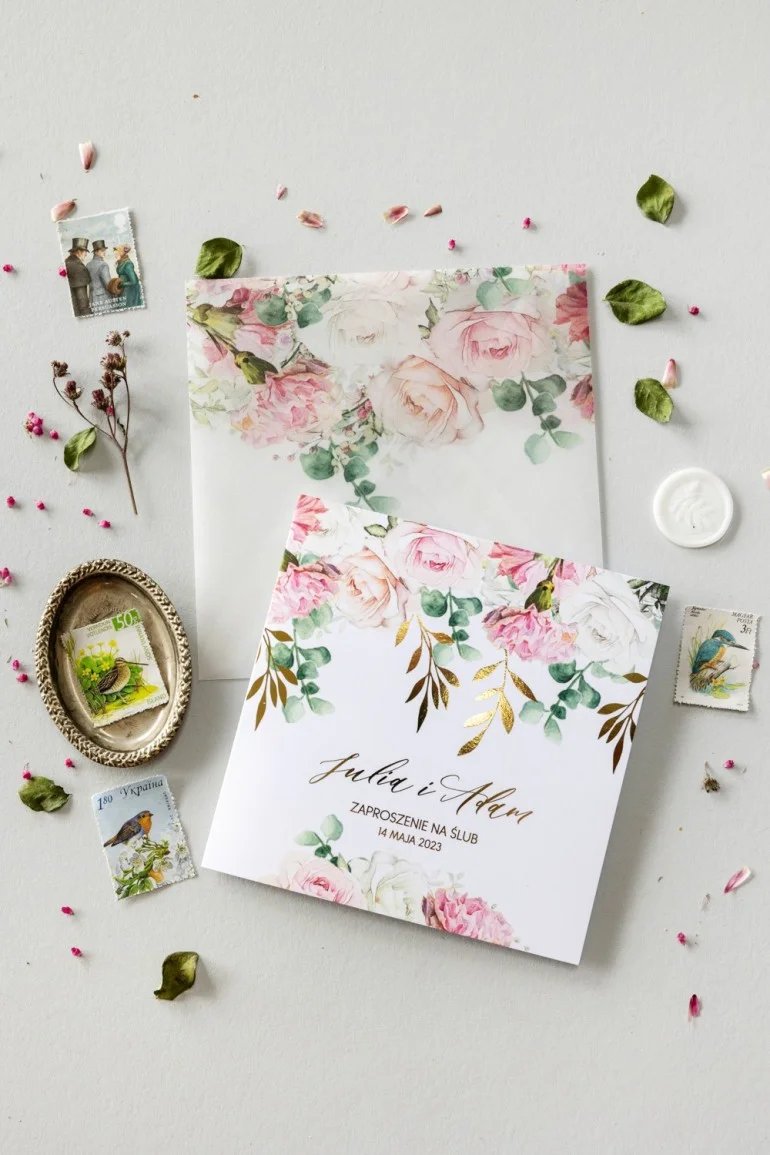
Wedding invitations with pink roses and gold foil, transparent envelope | Glamour style wedding invitations | Rubin No. 9
Mandatory church pre-marital courses – what you need to know
Pre-marital classes – a duty or an opportunity for growth?
For couples planning a church or concordat wedding, attending so-called pre-marital classes is a formal requirement. Many people initially treat them as a burdensome duty required to receive the certificate needed for the wedding. It is worth looking at pre-marital classes as an opportunity rather than just a chore – they can become a valuable experience for both of you, provided you approach them with an open mind. Instead of thinking "we just have to get this over with," it is better to set your mindset to: "we can learn something for ourselves here." Remember that the course instructor (often a priest or a mentor couple) is not there to examine or judge anyone. Good courses try to engage participants in discussions and reflection on future marriage, rather than just delivering dry theory.
What do church pre-marital courses look like?
The traditional form of pre-marital classes is a series of meetings held at the parish. Most often, it is a series of weekly lectures and conversations spread over several weeks – usually, the course lasts from 4 to 10 weeks depending on the parish. Meetings are usually held once a week (sometimes twice) and last about 1.5-2 hours. Alternatively, many centers offer weekend courses that intensively cover the program over two or three days (e.g., from Friday afternoon to Sunday). Such an option is convenient for busy couples or those in long-distance relationships. Upon completion, the couple receives a certificate of attendance – this document is required when drawing up the pre-marital protocol before a church wedding. Also, check what documents are needed for a church wedding in 2024. It is worth knowing that the certificate of completion for pre-marital classes is valid indefinitely, so even if you take the course long before the wedding, it remains valid forever. Church pre-marital courses are organized mainly at parishes, although sometimes larger centers (e.g., academic chaplaincies in cities) also accept couples from outside their parish. Participation is sometimes free or for a symbolic donation. Some parishes, however, introduce a fixed fee – usually, higher prices apply to weekend courses where the parish provides materials, refreshments, etc. Compared to other wedding expenses, the cost of the course is small, so it is worth treating it as part of your preparation budget rather than an unnecessary expense.

Wedding Guest Book with forest motif | Opal No. 2
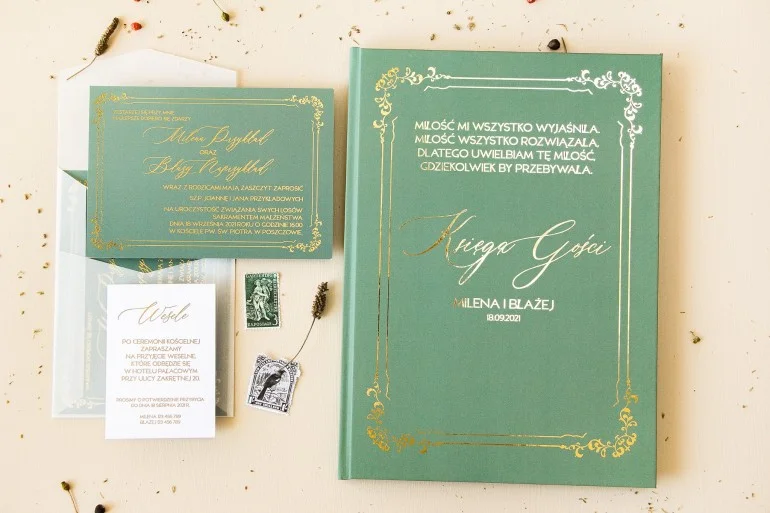
Personalized Guest Book with calligraphic gold lettering | Sand No. 3
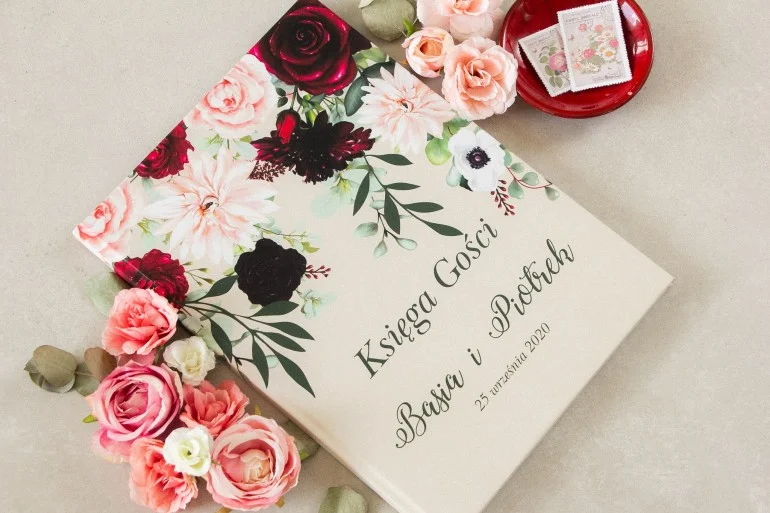
Burgundy Guest Book with anemones and dahlias | Korani No. 4
Topics and course of church classes
The program of pre-marital classes in the Church focuses on both spiritual and practical aspects of married life. During the meetings, topics such as the following are discussed:
- Theology of marriage and family – the meaning of the sacrament of marriage, marriage vows, and the role of God in the relationship. Future spouses learn what marriage is according to the Church, its characteristics (indissolubility, fidelity, openness to life), and potential obstacles to marriage.
- Relationships and family communication – although church classes are not typical workshops, they increasingly touch upon building bonds, marital dialogue, and resolving conflicts in a spirit of mutual respect. Many instructors emphasize the importance of honest conversation between spouses and the ability to listen to each other.
- Sexual ethics and responsible parenthood – an important block is discussing the Church's approach to marital intimacy. Engaged couples learn about the principles of Natural Family Planning (NFP), the value of marital purity, fidelity, and how to wisely plan offspring in accordance with Church teaching. This topic often raises the most questions and emotions, so it is often supplemented with testimonies from couples practicing NFP.
- Raising children and family life – future spouses hear about the challenges of parenthood, Christian parenting methods, and the roles of father and mother. Issues of building a family home based on values are also addressed.
- Everyday life and crises – part of the course also concerns everyday marital problems. Common causes of relationship breakdown (e.g., infidelity, lack of communication, financial conflicts) are discussed, as well as ways to deal with conflicts and seek compromises. This is a moment where secular experts (e.g., psychologists, family counselors) are often invited to share their knowledge and experience.
- Liturgy and wedding formalities – finally, some courses contain practical tips regarding the wedding ceremony: the rite of marriage, the words of the vows, and the meaning of symbols (rings, veil, etc.) are discussed. Sometimes this is combined with a rehearsal of the ceremony or an explanation of formal issues (documents needed for a church and concordat wedding).
As you can see, the range of topics is broad. Although the church course is catechetical in nature, many of the issues raised overlap with problems that marriages actually face. Engaged couples who take the classes seriously can gain a solid foundation – not just religious, but also practical for life.
Meetings at the family counseling center
A complement to classic pre-marital classes is usually meetings at a family counseling center. In the Catholic Church, engaged couples are usually required to have 2-3 visits to such a center. These are usually led by a qualified family life counselor (often a layperson with psychological or pedagogical training working at the parish). The purpose of these meetings is to deepen selected topics, primarily related to intimacy and family planning. The counselor discusses with the couple issues of natural methods of fertility recognition, the woman's cycle, contraception in light of Church teaching, and also talks honestly about sexual and emotional bonds in marriage. The family counseling center is also a space where engaged couples can ask questions about topics that might be embarrassing in a larger group – e.g., concerns about sexual life after marriage, health problems affecting fertility, etc. These meetings take place in a smaller group (sometimes even individually, one couple with a counselor), making it easier to have an open conversation. Although some couples approach the counseling center with reservation, it is worth using these meetings to clear up doubts and gain reliable knowledge from a specialist.
Day of reflection or pre-marital retreat
Some parishes also require engaged couples to participate in a so-called day of reflection or a short retreat. This is usually one afternoon of prayer and reflection or a weekend spent in a retreat format. The goal is spiritual preparation – a moment of shared prayer, reflecting on readings about love and marriage, and an opportunity for confession and entrusting your relationship to God. Such a day of reflection is often an integral part of church preparation, although it is not always mandatory. It is worth taking advantage of it, even if it is not imposed – it is a moment of silence in the rush of preparations, an opportunity to look at the wedding from a deeper perspective. We will write more about retreats for the engaged in the further part of the article.
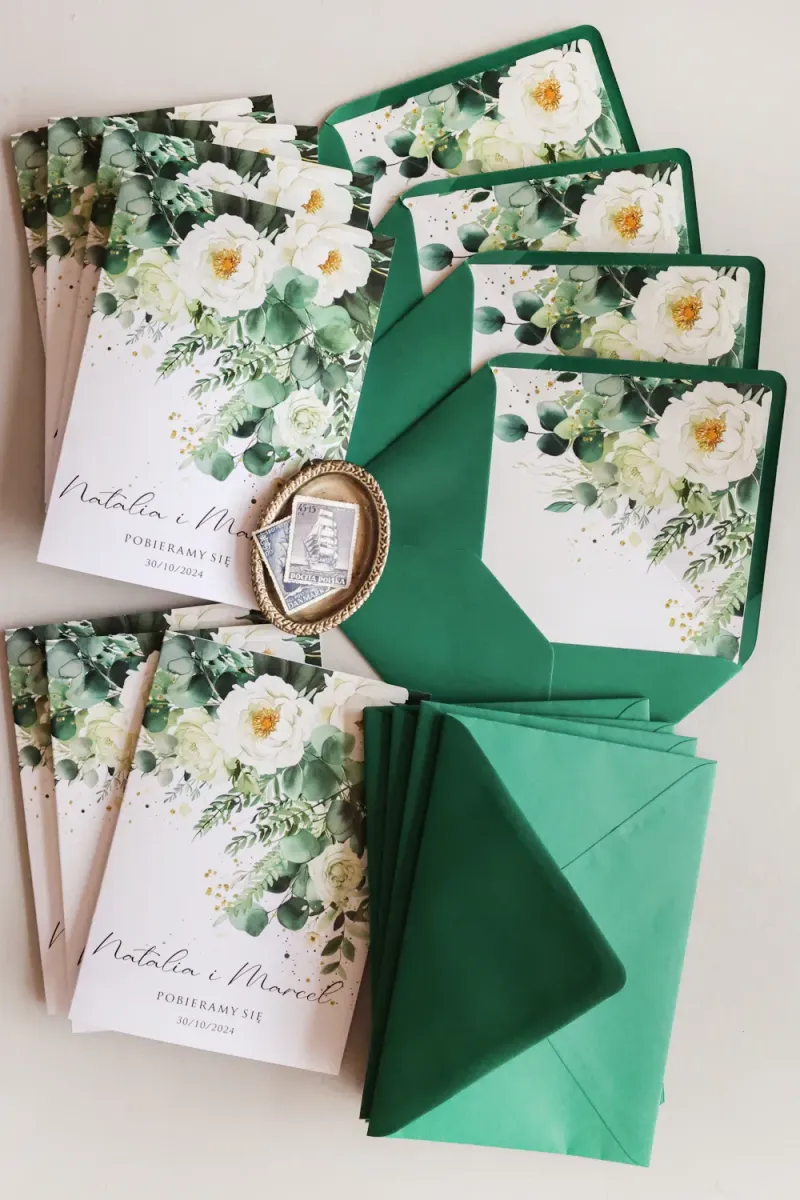
Wedding invitations with white flowers and green accents | minimalist invitations with personalization | Impresja No. 9
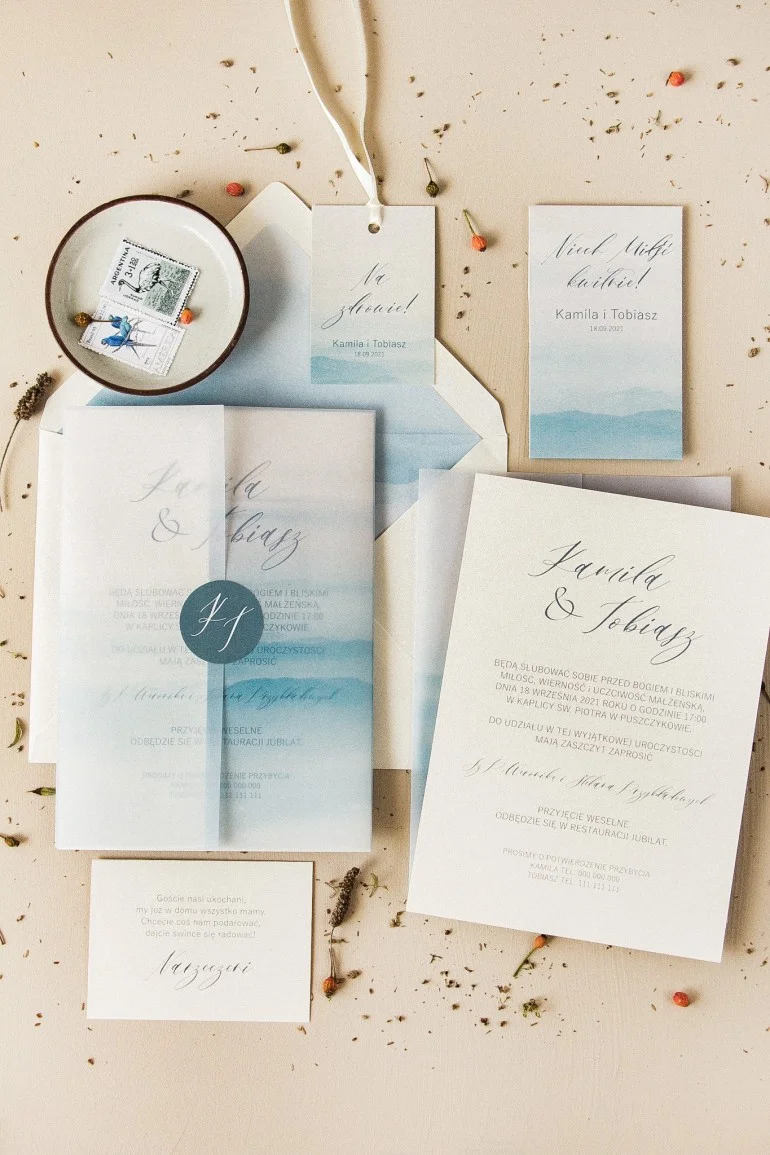
Elegant wedding invitations with vellum | Watercolor and Pearl | Opal No. 4
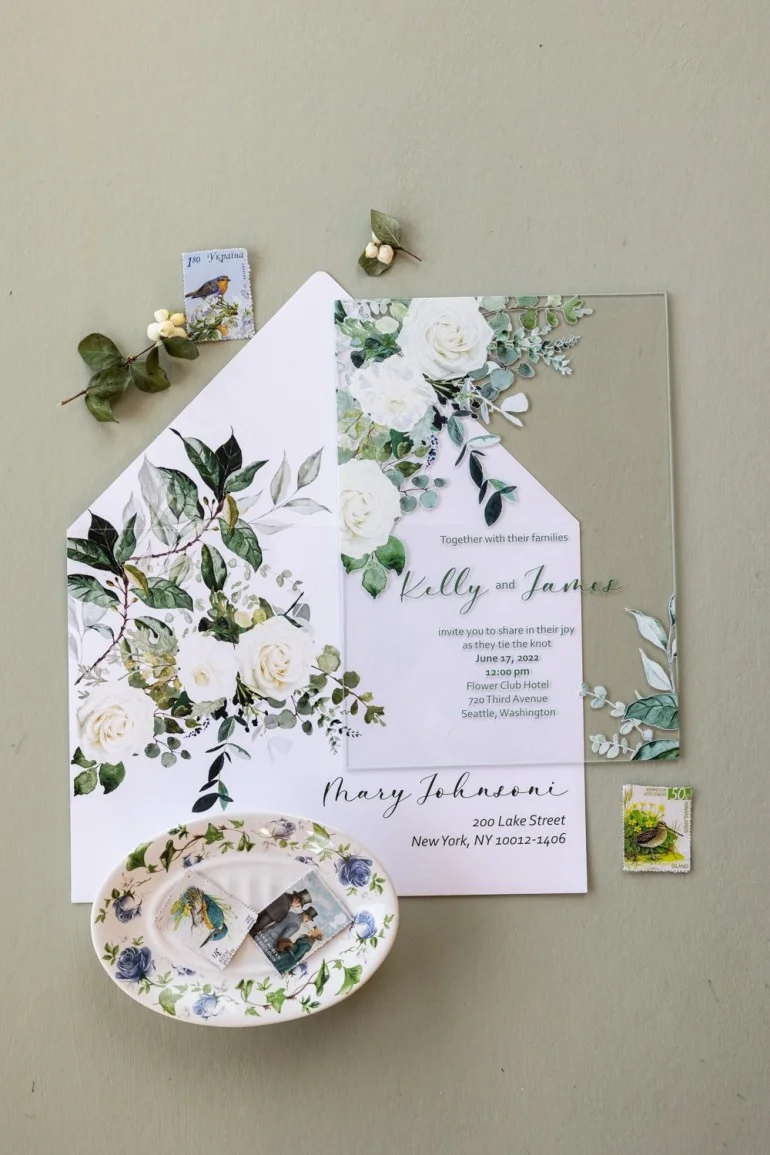
Floral elegance glass wedding invitations with white roses and greenery envelope | Korani No. 12
Secular pre-marital courses – workshops for engaged couples
Alternative or complement to church classes?
More and more couples – regardless of whether they are having a church or civil wedding – decide to participate in secular pre-marital workshops. Such courses do not replace church classes (if those are required), but they are a valuable complement to preparations. For engaged couples planning only a civil or humanist wedding, secular workshops can be the main form of pre-marital education, as they do not have mandatory classes. On the other hand, couples going to the altar often feel unsatisfied after traditional classes and look for more practical training – that is when they turn to secular courses. How do they differ from church courses? Primarily in the program and the way they are conducted. Secular workshops focus less on theory or religious aspects and more on practical psychological skills needed in a relationship. They are usually led by psychologists, therapists, or family coaches, and the atmosphere is relaxed and partnership-based – no one acts as a moral authority, but rather as an experienced mentor or relationship coach. For some couples, such a neutral space (without a church context) facilitates open conversation about difficult matters. It is worth emphasizing, however, that both approaches are not mutually exclusive – they can complement each other perfectly. You can take advantage of both church classes and secular workshops, drawing different values from both.
What do workshops and secular courses teach?
Secular courses for the engaged often take the form of interactive workshops held in small groups (e.g., a few couples) or even individually with one couple. They focus on active participation – exercises, discussions, tasks to perform as a couple. The program can be very rich and practical. Examples of thematic areas covered by such workshops include:
- Communication and conflict resolution – the couple learns how to talk to each other so they can truly hear one another. Trainers show techniques for effective communication, e.g., active listening, expressing your needs without attacking your partner, or healthily dealing with criticism. Typical styles of arguing and ways to break out of an impasse are also discussed. Engaged couples often practice in role-plays how to react in conflict situations so that the conversation brings them closer rather than dividing them.
- Finances and decision-making – money is one of the most common causes of misunderstandings in marriage. Therefore, workshops touch on the topic of household budgeting, setting common financial goals, dividing expenses, and even differences in approaches to saving or lifestyle. This can be a good time to think about wedding costs, even if you are planning a smaller reception. Couples often perform exercises involving planning a hypothetical budget or discussing how they imagine managing finances after the wedding. They learn to negotiate and seek compromises on big issues (e.g., buying an apartment) and small ones (everyday shopping).
- Roles in marriage and expectations – instructors help the engaged realize what their mutual expectations are regarding their roles as husband and wife. They talk about the division of household chores, career vs. family life, and plans regarding children. Issues of autonomy in the relationship are also addressed – how much "I" in "we," i.e., how to maintain a healthy balance between being a couple and individuality. Thanks to this, you can avoid disappointments like: "I thought he would change after the wedding" or "I expected her to take care of this or that."
- Intimacy and sexuality – in a free, safe atmosphere, couples can talk (sometimes women and men separately) about their fears and expectations regarding marital life. Sexologists or educators explain how intimacy changes over the years, how to care for closeness, and how to talk about your needs. Topics such as pornography, emotional infidelity, and libido differences are not avoided – it is important that the engaged are able to communicate honestly about sex as well.
- Boundaries and family after the wedding – an important thread is setting boundaries with other people after getting married. How to organize relationships with parents and in-laws so that the young marriage is autonomous? Workshops encourage reflection on where loyalty to the family of origin ends and loyalty to the spouse begins. This is important, for example, during holidays, raising children, or making important decisions (whose opinion counts?). The ability to assertively communicate external boundaries greatly helps protect marital intimacy and prevents excessive interference from third parties.
- Developmental crises and difficult situations – many workshops also prepare couples for various stages and potential crises that most marriages go through. The engaged learn, for example, about the typical challenges of the first year, the "baby blues" syndrome after the birth of a child, the crisis around the 7th year of marriage, the empty nest syndrome, etc. Knowing these natural phases makes it easier not to panic later ("is everything okay with us?") and to face temporary difficulties together.
As you can see, secular workshops offer very concrete life skills. The instructors – often experienced psychologists or therapists – share knowledge supported by scientific research and clinical practice. Thanks to exercises, the engaged can test themselves in various situations on an ongoing basis, better understand each other's reactions, priorities, and values. They often leave such a course with homework – e.g., having an honest conversation about a topic or developing a financial plan – which motivates further work as a couple.
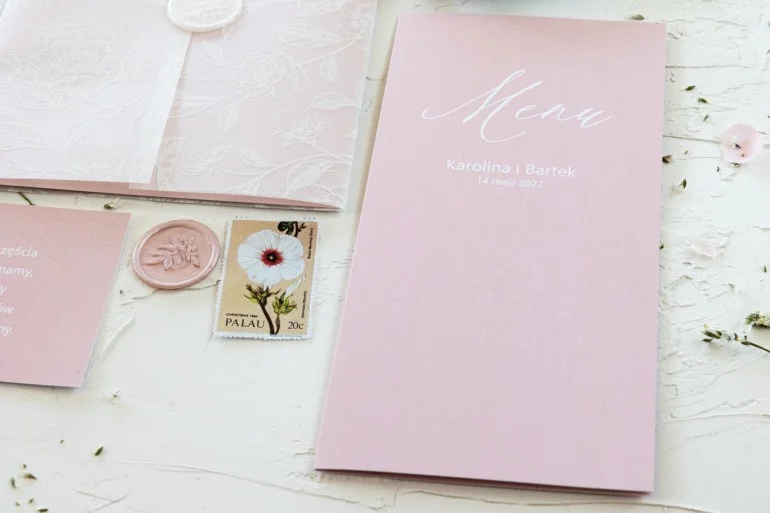
Elegant wedding menu with a delicate pink accent | Nefryt No. 1
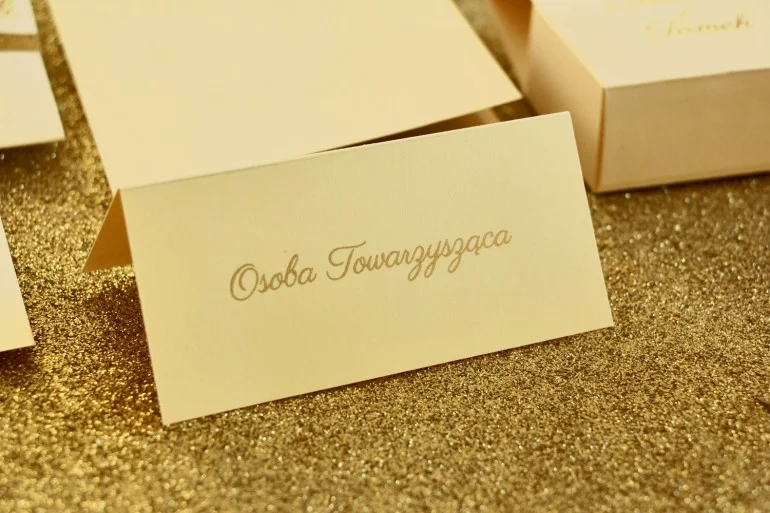
Glamour style alcohol tags with gold foil | Glamour No. 5
Gold-foiled place cards with eucalyptus and baby's breath | Soreli No. 5
Where to look for courses for the engaged in Poland?
The offer of secular courses and workshops for couples in Poland is increasingly broad. They are organized by, among others, family foundations and associations, psychological counseling centers, and private training companies specializing in personal development. In the largest cities (Warsaw, Krakow, Wroclaw, Poznan, etc.), you will easily find weekend workshops for the engaged – information is available online. It is worth searching, for example, under terms like "secular pre-marital course," "workshops for the engaged communication," etc. An example of an initiative worth noting is the "Rozwód? Poczekaj" (Divorce? Wait) Foundation, which periodically organizes "Before you say I DO" workshops. These are two-day meetings in Warsaw, led by a team of specialists (psychologists, sexologists, lawyers) and focused strictly on practical preparation for life together. Participation in such a course is an expense of several hundred zlotys per couple, but the investment pays off in the form of knowledge and experience that can protect the relationship from serious mistakes. Secular workshops are often held in intimate groups (e.g., 5-10 couples), which fosters the exchange of experience and discussions. If, however, someone prefers greater anonymity, online courses are also available – both in the form of live webinars and self-paced e-learning courses. The latter allow you to work through materials (videos, exercises, quizzes) at your own pace at home. Although live interaction is invaluable, the online option is a good solution when there are no workshops in the area or the engaged couple lives abroad. When choosing a course, it is worth paying attention to the competence of the instructors (are they certified trainers, psychologists, experienced counselors), the curriculum, and the opinions of couples who have already participated.
Elegant wedding invitations with embossing | Wedding invitations | Karmen No. 4
Subtle glass wedding invitations with floral motif in shades of white and green | Korani No. 15
Wedding invitation with gold accent and red flowers | Glamour and Boho wedding invitations | Ruskus No. 1
Couples therapy for the engaged – when and why is it worth it?
Is therapy before the wedding for us?
The term "couples therapy" is associated by many with a last resort for marriages on the brink of divorce. Meanwhile, psychotherapy for the engaged is becoming increasingly popular as a form of prevention and investment in the relationship at an early stage. Should everyone go to a therapist before the wedding? Of course, there is no such obligation. However, there are situations when it is worth considering consultations with a specialist even before getting married. For example:
- if you experience recurring conflicts during your engagement and, despite conversations, it is difficult to resolve them,
- when you have serious discrepancies on key issues (e.g., one of you wants children in the future and the other does not; religious differences; different visions of family life),
- if one of you carries the baggage of difficult experiences (childhood trauma, parents' divorce, infidelity in a previous relationship) and you feel it affects your relationship,
- when communication breaks down – silent treatments, outbursts of anger, or withdrawing into oneself appear, and you cannot break these patterns,
- or you simply feel fear of marriage, uncertainty, have a lot of concerns, and would like to work through them in a safe space.
In such cases, couples therapy before the wedding can prove invaluable. This is absolutely not a sign that something is wrong with you – it shows maturity and a desire to take care of the relationship. Thanks to therapy, the engaged can better understand their emotions and reactions, learn new ways of dealing with difficulties, and ensure they enter marriage with a clean slate, without sweeping problems under the rug.
What does therapy for the engaged look like?
Therapy for the engaged does not differ significantly from marriage therapy, with the exception that the couple applies at the pre-marital stage. At the beginning, there are usually 1-2 consultation meetings during which the therapist asks about the history of the relationship, problems, and expectations of the engaged. The goals of therapy can be various: improving communication, resolving a specific conflict, working on trust, working through infidelity, or simply getting to know each other on a deeper level. Then, a series of regular sessions takes place (e.g., once a week, lasting 50-90 minutes, depending on the therapist's mode of work). Therapy can last from a few to a dozen meetings – it depends on the complexity of the topic and the couple's willingness. During the sessions, both partners talk to the therapist (sometimes they also perform communication exercises). The therapist ensures that each side's voice is heard. Sometimes they act as a mediator in difficult topics, helping to name emotions and needs. An important element is learning new skills: the couple can, for example, learn according to the therapist's guidance how to argue differently, how to show support, and how to talk about their own feelings. Sometimes they also get homework – e.g., to try out a communication technique between themselves, keep an emotion journal, etc. Therapy for the engaged can be short-term (focused on solving a specific problem before the wedding) or long-term (focused on the general development of the relationship). Everything depends on your needs – good therapists adapt the approach to each couple individually. In Poland, couples therapy is offered by many psychologists and psychotherapists, often in family centers or private practices. The cost of one session is usually between 150 and 300 PLN (depending on the city and the therapist's reputation). This is an investment comparable to a visit to a medical specialist – it is worth looking at it as going to a "relationship doctor" to ensure that our future marriage will be healthy. Sometimes even a few meetings can bring great relief and a new perspective on the matters troubling us.
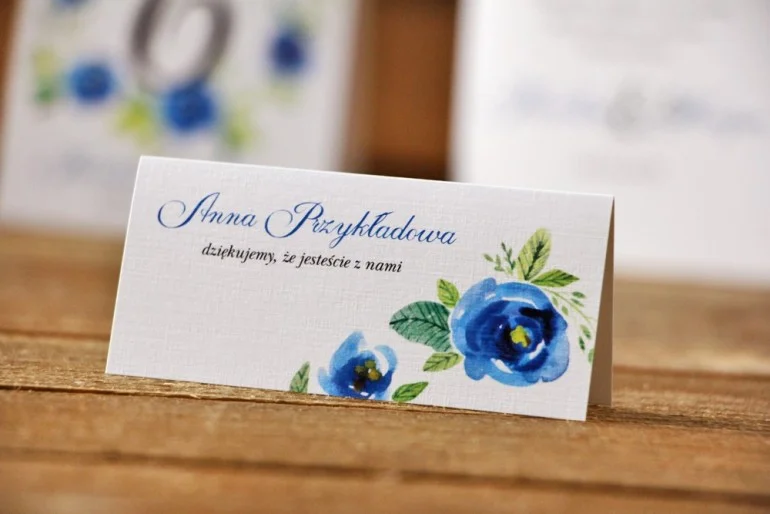
Place cards on linen-textured paper with roses in blue shades | Watercolor No. 10
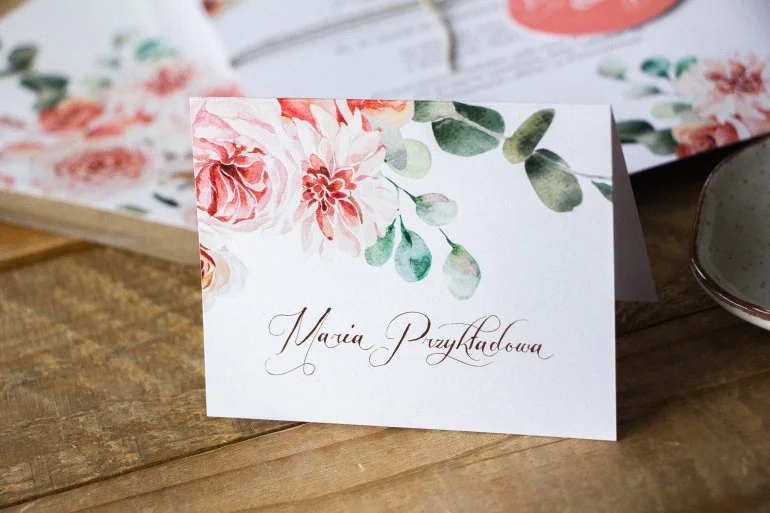
Place cards with a pink bouquet composition | Indigo No. 7
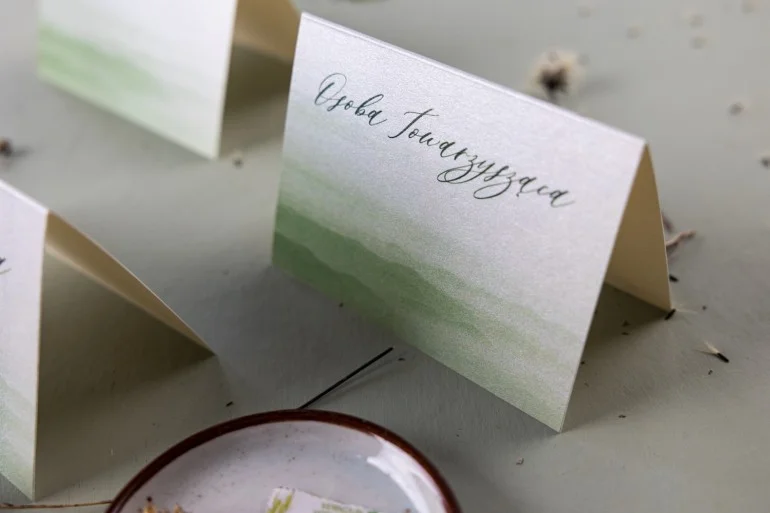
Wedding place cards on pearl cream paper with green decorations | Opal No. 11
Benefits of pre-marital therapy and possible concerns
What effects can therapy before the wedding bring? Above all:
- You will get to know each other better: even if you think you know everything about each other, talking in the presence of a third party often brings out new information and perspectives. You might better understand where certain reactions of your loved one come from, what really lies behind their words and behaviors.
- You will improve communication: you will learn to talk about your feelings and needs without fear and aggression, and also to listen more carefully to the other side. This is an invaluable skill that will pay off in marriage during many a difficult conversation.
- Resolution of current conflicts: under the supervision of a therapist, you can work through existing disputes or unresolved issues. Leave the office with concrete arrangements or compromises that previously seemed unattainable.
- Strengthening the bond and trust: the very act of working on the relationship together brings you closer emotionally. The couple learns to be honest and supportive of each other. Seeing your fiancé/fiancée trying for the good of the relationship builds a sense of security and strengthens trust.
- Less fear of the future: when you openly discuss potential difficulties and prepare a strategy for dealing with them, the fear of the unknown decreases. The wedding stops appearing as a jump into the deep end without a safety net – you already have some tools and an action plan.
It is also worth mentioning a concern that couples sometimes have – will therapy "over-analyze" our relationship to death? Will digging into potential problems create them artificially? Some experts warn that too intense analysis of a young relationship can create unnecessary tension. To avoid typical pitfalls, read about the most common mistakes made by young couples. Yes, there is a risk that therapy will reveal difficult truths that could even lead to a breakup before the wedding. Let us remember, however, that if the relationship does not survive an honest conversation about the future, will it survive the hardships of a long-term marriage? In most cases, therapy does not break up a good relationship – on the contrary, it helps build a stronger one. And if it were to reveal fundamental differences that cannot be reconciled, it is better that it happened sooner than after putting on the rings. Therefore, it is not worth giving up professional help for fear of discovering uncomfortable topics. A professional therapist will ensure an atmosphere of trust and will accompany you in the process of reaching the truth. Ultimately, every decision is yours anyway – therapy will not impose anything on you. In summary, pre-marital therapy is an option for couples who want to consciously enter marriage, working through difficulties beforehand or simply developing the skills of being together. It is not a sign of weakness, but proof of maturity and care for your loved one.
Retreats for the engaged – spiritual preparation for marriage
What are retreats for the engaged?
For believing couples, an excellent complement to preparations can be pre-marital retreats. This is a form of a multi-day religious reflection, aimed specifically at the engaged. Retreats are often organized by dioceses, religious orders (e.g., Jesuits, Dominicans), or Catholic movements (such as Marriage Encounters). They usually last a weekend (from Friday to Sunday) in an isolated place – a retreat house, monastery, or conference center. The program combines elements of a pre-marital course (in the sense of conveying content about marriage) with deep spiritual reflection. Often, participation in such retreats is honored by parishes as fulfilling the obligation of pre-marital classes, because they contain the required content, but presented in a more intensive form. During the retreat, the engaged have the opportunity to listen to conferences on the topics of marriage (led by both priests and lay spouses), participate in Holy Masses, prayers, and meet other couples preparing for the wedding. An important element is the couple's own work – organizers provide questions to discuss as a couple, encouraging the engaged to have an honest face-to-face conversation on important topics. Such a format combines the advantages of workshops (dialogue of the engaged) with a spiritual element (prayer and sacraments). For many couples, retreats are extremely strengthening because they allow them to break away from the everyday hustle and bustle of preparations and focus only on each other and on God.
Spiritual experience as a couple
Participation in pre-marital retreats is primarily about deepening the spiritual bond between the engaged. In an atmosphere of reflection, it is easier to ask yourself questions about fundamental values: What do we want our home to be like? On what principles will we base our marriage? What role should faith play in our family? Often, it is only at a retreat that couples honestly talk, for example, about whether they will pray together, how to raise future children in the faith, how to deal with differences (e.g., when one of the engaged is less religious). This is accompanied by shared prayer – for believers, nothing unites the engaged like praying together, asking God for a blessing for the relationship. Sometimes the engaged pray together for the first time, which can be a very moving experience. Retreats are also a community experience – meeting other couples who have similar dilemmas, fears, and dreams. Exchanging experiences during breaks, conversations over meals, or group work show that you are not alone in experiencing pre-wedding stress. Often, acquaintances and friendships are formed on such trips that last long after the wedding, because they connect people who have gone through an important stage of the journey together. One cannot forget that retreats are also a time of sacramental grace – the possibility of confession, adoration, participation in the Eucharist, and sometimes the renewal of vows of pre-marital purity or other symbolic gestures. For believing couples, this is a spiritual boost before the wedding. Many engaged couples return from retreats strengthened internally, with a sense of peace and unity: "since we survived the silence at adoration at 6 a.m. and honest confessions during marital dialogue together, we are ready for a lot" – participants sometimes joke.
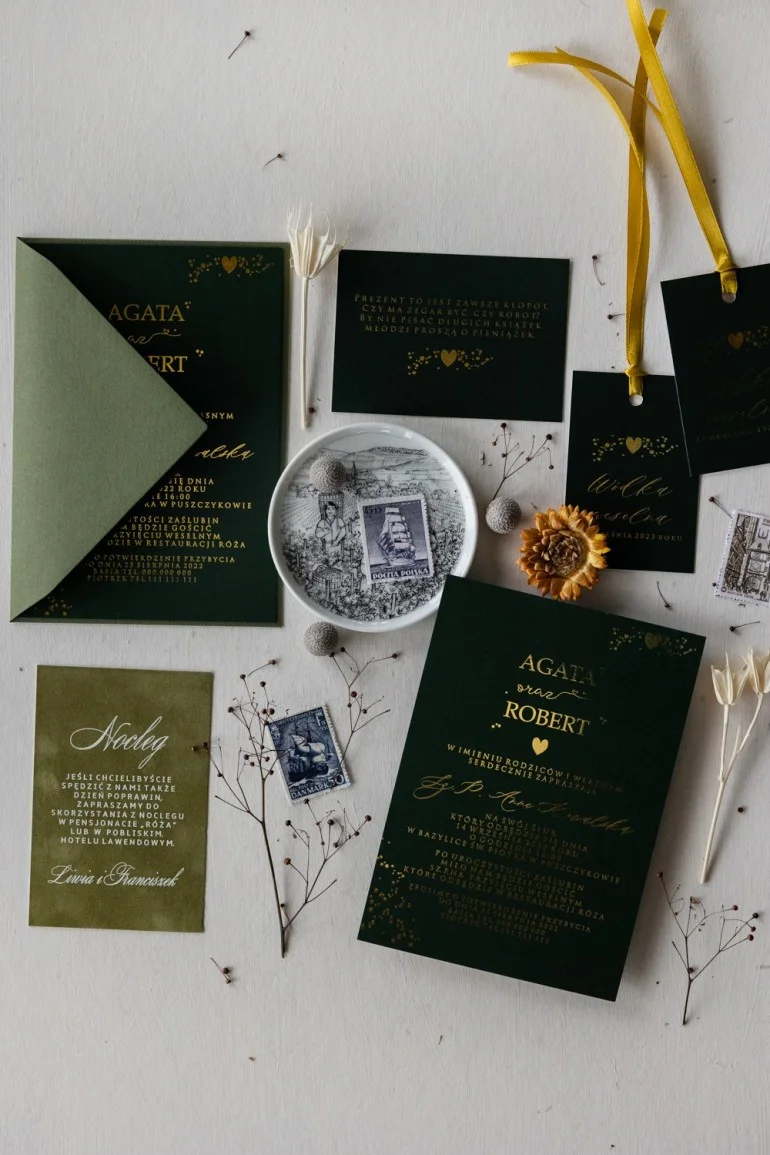
Single-card wedding invitations with gold foil | Simple No. 2
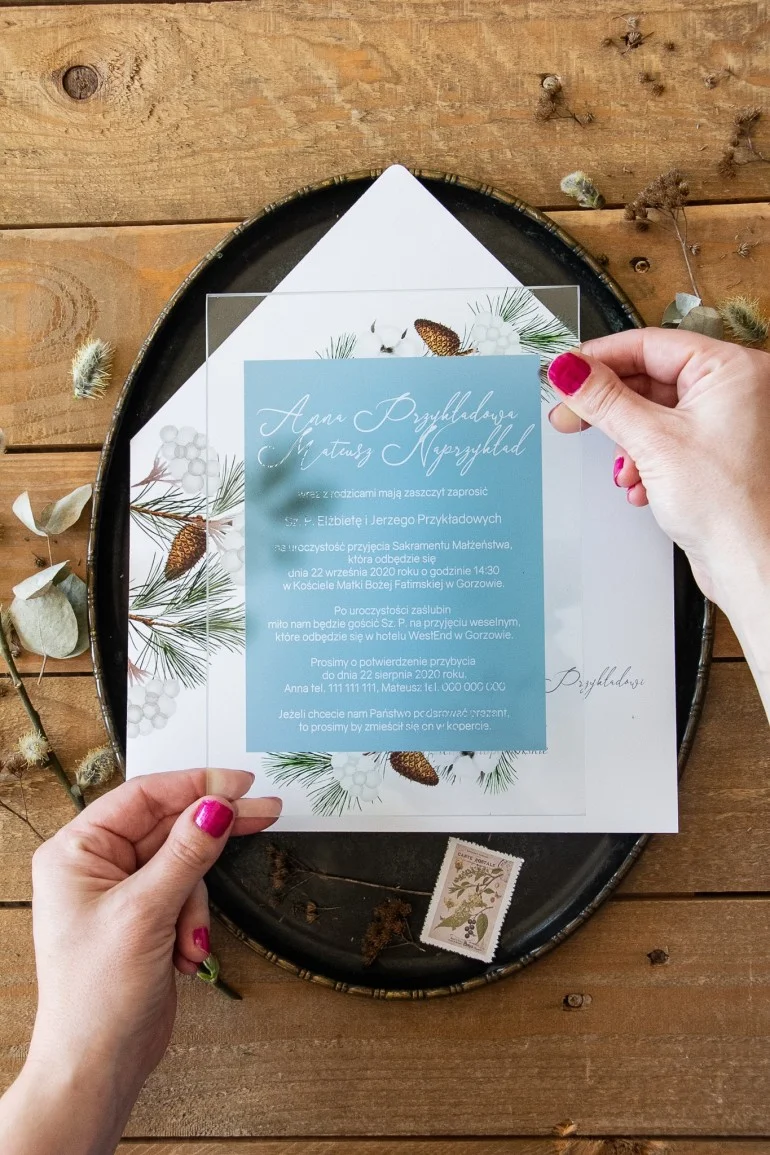
Extravagant glass wedding invitations | Glass winter accent | Cotton & Pine | Korani No. 8
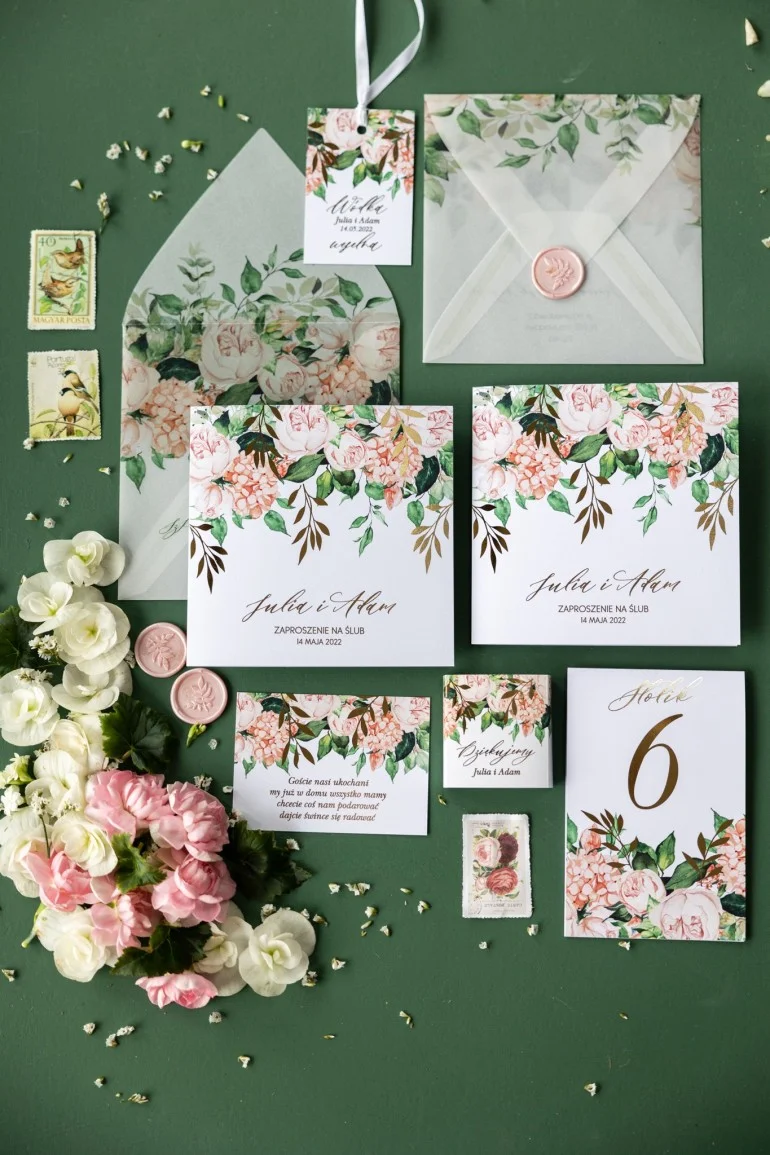
Unique wedding invitation with gold foil, pink peonies and vellum envelope | Unusual wedding invitations | Rubin No. 10
Available retreats in the country
In Poland, there are quite a few opportunities to attend retreats for the engaged. The aforementioned Marriage Encounters conduct both a series of several-week evening meetings ("Evenings for the Engaged") and closed weekend retreats. During them, emphasis is placed on dialogue as a couple – the engaged talk about prepared topics and learn to resolve conflicts based on Christian values. Interestingly, it happens that after such retreats, the engaged postpone the decision to marry or withdraw from it altogether, which only proves how seriously they took the reflection on the relationship. Another proposal is retreats organized by various dioceses – e.g., many diocesan family chaplaincies announce dates for pre-marital retreats every year, which usually take place several times a year in fixed places (retreat houses). The formula is similar: a weekend filled with conferences and prayer, led by a priest and married couples. Thematic retreats are also popular, e.g., focused on marital spirituality, communication, or those intended for interfaith couples. If you are interested in such a form of preparation, it is worth asking at your parish or diocesan curia about the dates. Information is also available online (search for phrases like "retreats for the engaged [city/region name]"). Since the number of places is limited, it is worth planning your participation in advance. Participation in retreats usually involves a fee (covering accommodation, meals, and materials), but it is often symbolic or a donation, especially when organized by the Church. Even commercial retreats (organized by lay retreat leaders) cost little more than a regular weekend trip as a couple.
How to choose the right form of preparation for you?
Course, workshop, or therapy – what to choose?
Faced with so many options, the engaged can feel lost: should we go to a church course, or is a secular workshop better? Or maybe therapy right away? There is no universal answer here, because every couple is different. It is worth looking at your needs and circumstances:
- Concordat wedding: Pre-marital classes at the parish are mandatory. However, you can choose the form in which to take them (spread out over time or weekend; at your parish or, for example, with the Dominicans or Franciscans, who are famous for interesting retreats for the engaged). If you feel that the church course alone is not enough practice – consider additional workshops or therapy.
- Civil wedding: You have no mandatory training. All the more reason to voluntarily take care of pre-marital education – even a short online course or a weekend workshop. This will give you an advantage in the form of better mental preparation than couples who do nothing.
- No serious conflicts: If there are no major "friction points" in the relationship, and you simply want to strengthen the bond – start with workshops for the engaged. This is a pleasant way to spend time and learn at the same time, you can treat it as an interesting adventure. If after the workshops you feel that certain topics have been left unresolved or require deeper work – then you can always go to individual therapy.
- Specific problem: If you are struggling with a specific challenge (e.g., jealousy destroys trust, you are plagued by infidelity from a previous relationship, you have extremely different communication styles causing constant arguments) – it is worth thinking about couples therapy right away. There you will focus on this problem in-depth and look for solutions with the help of a specialist. Group workshops in such a situation may be insufficient or too general.
It is worth emphasizing that the individual forms do not have to be mutually exclusive. You can take a course at the parish (for formalities and spiritual knowledge), go to a communication workshop, and if the need arises – consult a therapist. The more wise experiences you gain before the wedding, the better for you.
Joint decision and openness
It is crucial that the decision on the form of preparation is made together. Sit down together and talk: what would we like? What are we afraid of in marriage? Do we feel the need to talk to someone from the outside about our relationship? This conversation in itself can bring a lot – it will be the first exercise in planning the future as a couple. Perhaps it will turn out that one of you dreams of a retreat in silence, and the other would prefer dynamic skills training. Maybe it can be reconciled, e.g., by going on a retreat and later to a workshop. It is important that both people feel comfortable with the chosen option. If one goes to a course with reluctance, under duress, little will come of it. Agreeing together that we are doing this for us will result in better engagement. Regardless of what you choose, enter into it with open minds and hearts. Do not set yourself up skeptically ("this will surely not help"), but do not expect miracles after one weekend ("we will solve all our problems"). Treat the course or therapy as the beginning of a process – you will get tools, tips, the rest depends on your work on a daily basis. It is also important to trust the instructors. If you feel that, for example, the therapist does not suit you or the workshops are conducted in a way that does not convince you – you have the right to look for another option. The point is to really benefit, and not just tick off another item from the list of pre-wedding duties.
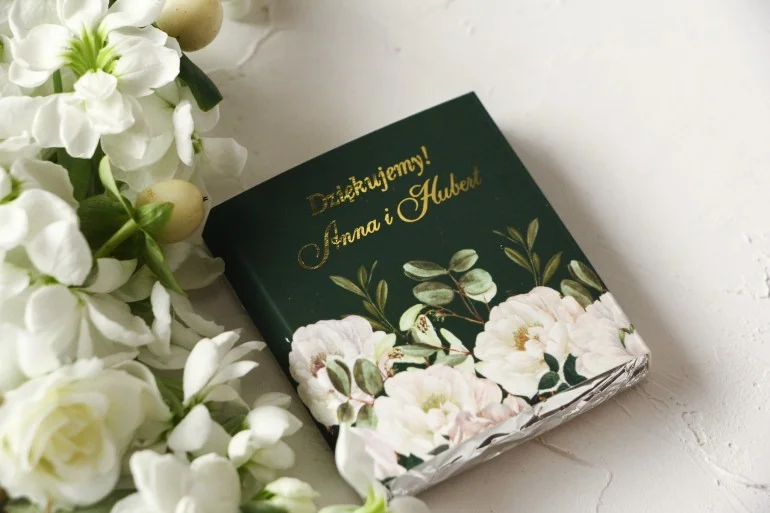
Wedding chocolates as guest favors with a bouquet of white roses and eucalyptus | Sapphire No. 3
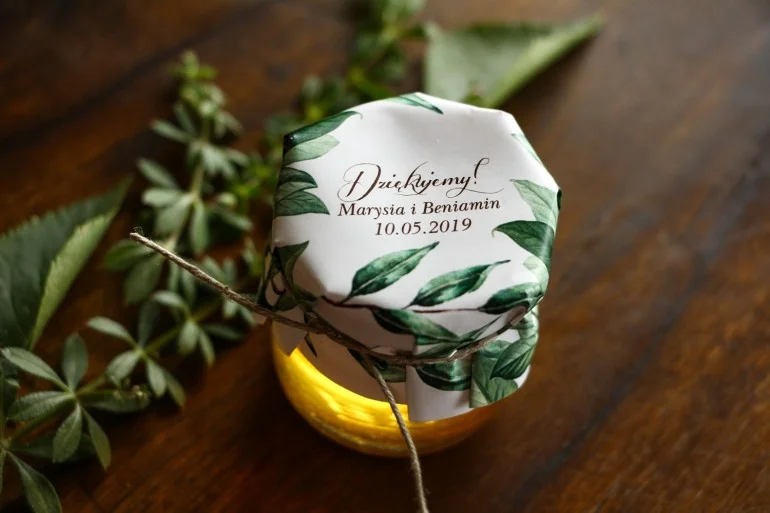
Wedding honey with olive branches | Indigo No. 2
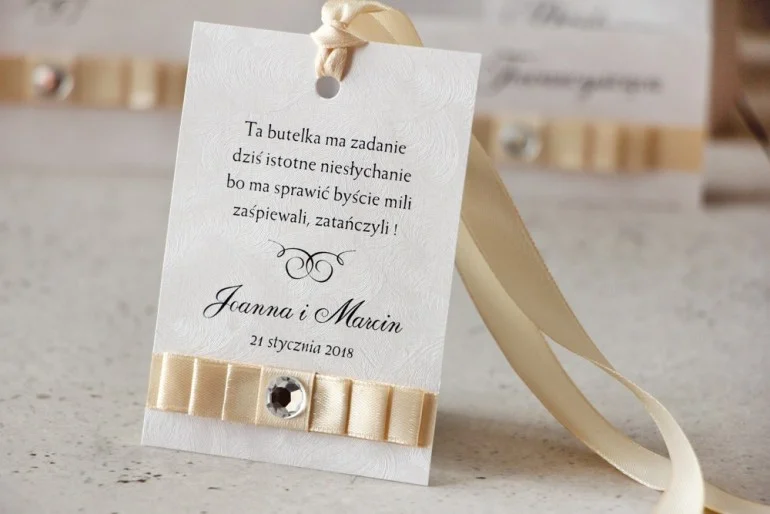
Elegant wedding vodka tags with rhinestones | Amaretto No. 1
Do not put it off until the last minute
It is worth including pre-marital preparation in your wedding planning schedule well in advance, just like the wedding day schedule. Parish courses have their deadlines – sometimes you need to sign up for them even half a year before the planned wedding date, because places run out quickly. Similarly with workshops – sometimes the nearest available date is in a few months. Do not leave such preparation until the last minute. Starting courses too late results in stress ("will we make it before the wedding?") and makes us treat them superficially, with our thoughts already on the approaching ceremony. Ideally, you should close the main stages of pre-marital education a few weeks before the wedding – to be able to focus in peace on the final organizational preparations and spiritual focus for the wedding day. Remember also that the knowledge and skills acquired in courses or therapy pay off gradually. Give yourself time to implement them. If you have learned, for example, new communication methods, practice them after the course during everyday conversations or disputes over trifles. The more you practice before getting married, the more natural they will become after the wedding.
A foundation for the future – an investment that pays off
A stronger marriage from the first days
Investing time and energy in pre-marital courses or therapy translates into a stronger start in marriage. Couples who have talked through important issues beforehand less often experience cognitive shock after the wedding like: "I didn't know he thought that about children!" or "We never talked about the division of chores, and now there is an argument." Thanks to preparation, you already have certain arrangements and mechanisms worked out. It is a bit like building the foundation of a house – it is harder to shake it later. In the first months and years of marriage, there will certainly be surprises, because life will always bring something – but they will be easier to bear if you have gone through "training" beforehand. Even short arguments are easier to soothe when both of you know communication techniques and have the habit of talking.
Long-term benefits for the family
Good preparation is not just a benefit here and now, but a long-term investment. A strong marital bond, based on understanding and trust, creates a healthier environment for starting a family. When children appear, parents who can communicate effectively and support each other cope better with the hardships of upbringing. They avoid destructive arguments in front of children, they can make parenting decisions together. It can be said that in courses or therapy, you learn to be not only spouses but also a future dad and mom – because a good relationship between you is the foundation of a sense of security for your offspring. Furthermore, the habits learned from such classes (e.g., regular conversations about problems, showing support, taking care of time just for the two of you) will pay off perhaps only after many years. When the first fascination passes and life pulls you into a routine, couples who have "hygienic" habits for the relationship encoded will notice the distance faster and react, e.g., by seeking help or refreshing the bond (even by returning to notes from the course!). You can safely say that such an investment pays off throughout the entire marriage – in the form of a better quality of life together.
An example for others
By deciding on conscious preparation, you can become an inspiration for other couples. In Poland, the belief still persists that one does not talk about the hardships of a relationship publicly, and that "those who have a serious problem" go to a psychologist. Meanwhile, normalizing pre-marital courses and therapy is a signal that taking care of a relationship is just as important as taking care of your health or career. Perhaps siblings, cousins, or friends seeing your example will also think: "Hey, maybe we should take advantage of something like that before the wedding?" In this way, a positive trend for developing marital competencies spreads, which in the long run can contribute to a decrease in the number of failed relationships. Finally, it is worth emphasizing: love itself is wonderful, but it is only the beginning. Maintaining and developing love requires work, and pre-marital courses, workshops, or therapy provide the tools for this work. Just as you invest in a beautiful wedding – invest also in your future marriage. The best wedding gift you can give each other is a well-prepared, strong relationship – for better or for worse.
Recommended articles:
- How to choose a suit or tuxedo? Wedding guide for the Groom
- Floristry on trend: Trends in wedding bouquets and floral decorations 2025
- Dream honeymoon: How to plan a unique honeymoon or mini-moon?
- Guest list and seating wedding guests: How to create the perfect table plan? Also remember about place cards, which will facilitate organization.
- First dance: How to choose a song and prepare a routine?
- When to start planning your wedding? Step-by-step guide
- What texts to put on wedding invitations? Inspiration and tips